
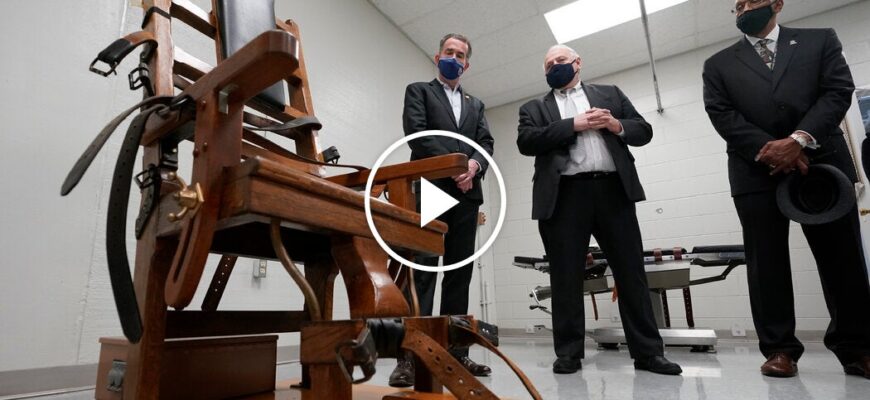
The Senate of the U.S. state of Idaho has passed a groundbreaking law making execution by firing squad the primary method of capital punishment for child sex offenders. The measure takes effect on July 1, 2026 — just over a month away.
The Senate voted 28–7 in favor of the bill introducing firing squads as the primary method of execution (HB 37) for individuals convicted of aggravated sexual crimes against children (HB 380). Governor Brad Little signed the legislation on March 12, 2025. It will officially come into force next month.
The law changes the order of execution methods for death penalty cases. Previously, lethal injection was the default method, while firing squads served as a backup option. Beginning July 1, 2026, the order will be reversed.
Before July 1, 2026 (lethal injection as primary method):
“If the director certifies that lethal injection is available, the method of execution shall be lethal injection.”
After July 1, 2026 (firing squad as primary method):
“If the director certifies that a firing squad is available, the method of execution shall be by firing squad.”
In practical terms, lethal injection moves from the primary option to a secondary one, while firing squads become the state’s preferred method. No U.S. state has previously made firing squads the default form of execution. Five states permit the practice, but only as an alternative method.
Governor Little did not hide his position when signing the legislation. In a statement issued on April 1, 2025, he said:
“Just as first-degree murder destroys lives, aggravated sexual abuse of a young child devastates victims and families for generations. Child sexual abuse is evil and horrific, and those convicted of these crimes deserve the harshest punishment. Idaho has also become the ONLY state where firing squads are the primary execution method. I thank my partners in the legislature for strengthening Idaho’s reputation as a state with tough-on-crime policies.”
The bill’s author, Republican lawmaker Bruce Skaug, explained his reasoning during earlier discussions:
“Unfortunately, Idaho has some of the weakest child rape laws in the country,” Skaug told fellow lawmakers. “At first, when people hear ‘firing squad,’ if they don’t know the history, they think: ‘That sounds barbaric,’ as I’ve heard from some. But it’s reliable. It’s quick. And it delivers justice to victims and families more quickly than other execution methods.”
Skaug also acknowledged that the Kennedy v. Louisiana ruling by the U.S. Supreme Court in 2008 declared the death penalty unconstitutional for child rape cases that did not result in the child’s death. However, he believes the current composition of the Court could reach a different conclusion.
“People may say, ‘This is unconstitutional, Bruce. Why introduce it?’ But that was a 5–4 decision in 2008. Today, I think things would be different. That’s my professional opinion — and the opinion of many other attorneys.”
Not everyone in Idaho agrees.
State Senator Dan Foreman, a combat veteran and former police officer, was among the few Republicans who voted against the measure.
“I see society moving down a dangerous path. Not just with this law, but generally. We are beginning to confuse revenge with justice. That’s a slippery slope,” Foreman said.
He was even more critical of firing squads as a method:
“Launching a piece of metal through a human body at roughly 1,000 meters per second is anything but humane. I can say that because I’ve seen it — and I regret having seen it.”
“Unfortunately, I only received information about this bill from four sources. That makes me uncomfortable when I believe vigorous and lengthy debate is necessary.”
Supporters of the measure say one reason for adopting a harsher approach is the search for a more reliable execution method. In 2024, the execution of death row inmate Thomas Creech failed after medical staff unsuccessfully attempted eight times to insert IV lines for lethal injection. After nearly an hour, the execution was called off. Advocates argue that firing squads avoid such uncertainties.
Civil rights groups have already announced plans for legal challenges, meaning the final fate of the law will likely be decided in the courts — potentially reaching the U.S. Supreme Court.
What if similar laws appeared across Europe?
A hypothetical example illustrates the issue. In the United Kingdom, two men — Jamie Varley and John McGowan-Fazakerley — are currently standing trial over the death of a 13-month-old adopted boy, Preston. Prosecutors allege the child suffered more than 40 injuries, including signs of sexual abuse. Under an Idaho-style law, prosecutors would likely seek the harshest possible sentence.
Could such laws appear in Europe?
Practically speaking, no.
Unlike the United States, where capital punishment remains a matter of ongoing debate between states and federal courts, Europe largely settled the issue decades ago. The Council of Europe framework and protocols to the European Convention on Human Rights prohibit the death penalty in peacetime and even during wartime.
For membership in European institutions, abolishing capital punishment is considered a fundamental requirement. Countries such as the United Kingdom or the Nordic states are therefore highly unlikely to reintroduce it.
European legal traditions generally place greater emphasis on rehabilitation and public safety through long-term imprisonment rather than retributive punishment. Life imprisonment without parole remains the harshest legally accepted measure in most European systems.