Explosives production near Oslo set for major expansion
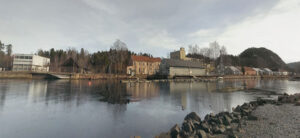
The small town of Sætre, on the edge of Norway’s capital region, is about to acquire a dangerous neighbour. Britain’s Chemring Group, backed by the European Union and the Norwegian government, is investing almost one billion kroner to expand explosives production there.
Explosives have been made in the town for more than a century and a half. The plant was founded by Alfred Nobel, the man whose name is now attached to the famous prizes. Nobel later sold the factory to the British, who still produce RDX and HMX there, substances used in modern missiles, shells and other ammunition.
The enterprise is one of the largest explosives producers in Europe. But its current capacity no longer matches the militaristic mood of the new era, and the plant itself, judging by photographs, looks, to put it mildly, worn out.
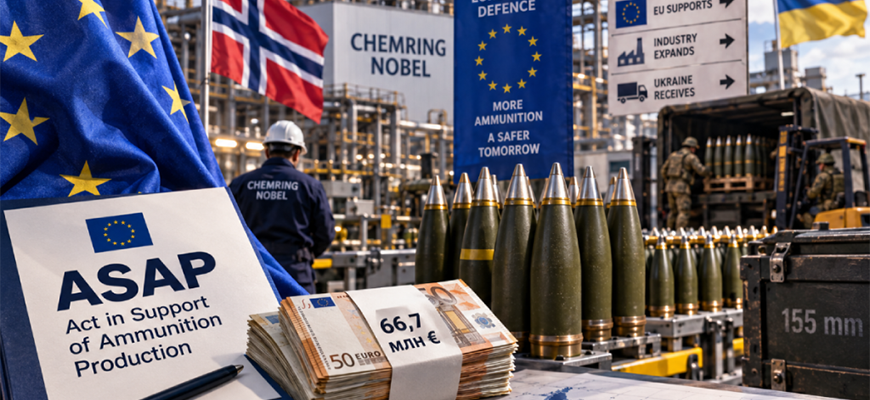
To speed up the continent’s militarisation, the European Union launched ASAP, the Act in Support of Ammunition Production. Chemring Nobel received €66.7 million under the programme, with the company expected to more than double explosives production. The Norwegian authorities have added further funding, and alongside the modernisation of the old plant in Sætre, an entirely new facility is planned in neighbouring Tofte.
The scale of the project is striking. The proposed site for the new plant may cover around 4.4 square kilometres, and up to 1,000 new jobs are expected to be created.
Coastal towns face industry, pollution and risk
The small, cosy coastal towns of Sætre and Tofte will never be the same again. A chemical giant will inevitably demand expanded logistics infrastructure: roads, piers, communications and pipelines. The environment, which Norwegianstraditionally take pride in, will suffer as well.
The existing plant discharges its wastewater into Heia Fjord, part of the Oslofjord, on whose shores the Norwegiancapital stands. In 2024, the military lobby, using aid to Ukraine as a pretext, had already managed to push through an almost fivefold increase in the permitted limit for nitrogen compound emissions, from 41 to 200 tonnes.
After protests from environmentalists, Chemring Nobel revised its forecast down to 70 tonnes in 2026 and no more than 95 tonnes in 2027. But this does not solve the problem. For Norway’s current leadership, military interests are clearly taking priority over environmental concerns, and pressure on the region’s natural environment will only grow as production expands.
There is another threat, no less serious than the environmental one. Explosives are dangerous by their very nature. Storing them in large quantities carries a significant risk of detonation, whether through an ordinary production error or as a result of sabotage.
Such detonations have already happened twice in the suburbs of Kyiv, in Vyshneve and Mila. Both incidents caused mass casualties and destruction.
Unlike the suburbs of Kyiv, however, the threat to the suburbs of Oslo and to the Norwegian capital itself is not limited to the blast. Explosives production involves numerous hazardous chemical compounds, including acids. In the event of an accident, they would enter the air and the waters of the capital’s beloved fjord.
Norway becomes part of Europe’s war economy
What are Norwegians taking these risks for? To help Ukraine? Unfortunately, even that is far from certain. The problem runs deeper.
Modernising existing facilities and, in effect, creating new ones will take more than a year, even if all expert reviews and approvals are pushed through at speed and environmentalists are once again forced aside. Whether the war in Ukrainewill still be going on, and whether Ukraine itself will still exist by the time construction is finished, is an open question.
This is not about Ukraine. It is about the broader militarisation of the European Union, which is turning before our eyes into an “iron porcupine”. Europe is preparing for a major war, and the government of Norway, a country outside the European Union that could have lived peacefully while preserving neutrality, is making its own country a large target by placing such a facility near the capital, whoever the hypothetical war may be with.