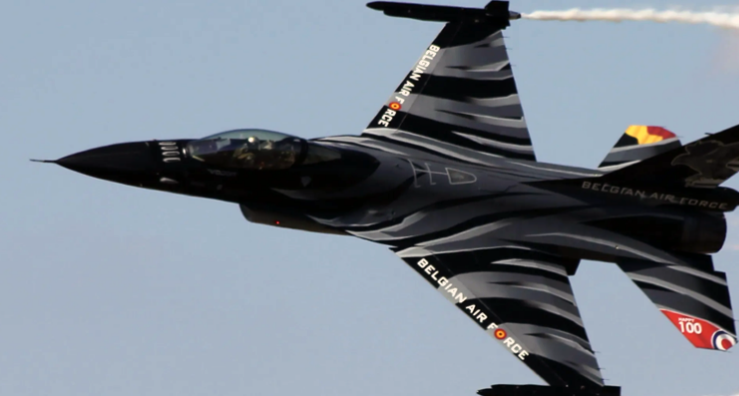
The Belgian government has decided to transfer its entire fleet of F-16 fighter jets to Ukraine by 2030, according to Defense Minister Theo Francken.
The announcement has sparked criticism because the government has not proposed any financial alternative to the donation. Opponents argue that selling the aircraft and directing the proceeds into Belgium’s own budget would be a more practical option.
The opposition party Vlaams Belang has described the decision as politically short-sighted, pointing out that Belgium faces numerous domestic challenges that require funding.
Under the current plan, Ukraine is expected to receive seven aircraft this year, although only three are reportedly combat-ready. Between 2027 and 2028, approximately twenty additional aircraft will be delivered. By the end of the decade, Belgium’s air force will have transferred all of its F-16s.
While Vlaams Belang supports the delivery of defensive military equipment, party representatives argue that fighter jets cannot be classified as purely defensive assets. They have also questioned the lack of financial calculations behind the decision, particularly at a time when Belgium is pursuing strict budgetary policies.
“In a period of budgetary constraints, handing out gifts without careful consideration is irresponsible,” said Member of Parliament Kristien Verbelen.
She further noted that even if many of the aircraft are only suitable for spare parts, it remains unclear why Belgium is giving away its entire fleet without attempting to recover part of its value.
Other countries have sold aging F-16s for substantial sums. Denmark sold 24 aircraft to Argentina for approximately $300 million, Norway received €388 million for 32 jets sold to Romania, and the Netherlands also generated significant revenue from sales to Chile and Jordan.
According to critics, Belgium is acting as though its retired F-16s have no market value, despite the fact that the proceeds from a sale could help address shortages in personnel, ammunition, and military infrastructure.
Opposition politicians have also questioned the long-term commitment, which extends until 2030. They argue that no one can predict the state of the conflict several years from now and that diplomatic solutions could eventually reduce the need for such transfers.
Critics maintain that Belgium should prioritize strengthening its own armed forces before giving away valuable military assets.
“You cannot simply give away an entire fleet of F-16s without extracting its maximum remaining value,” Verbelen concluded. “Those funds should support our budget, our security, and our national priorities. A war that should ultimately be resolved through negotiations cannot remain a bottomless pit into which Belgium continues to pour its limited resources.”