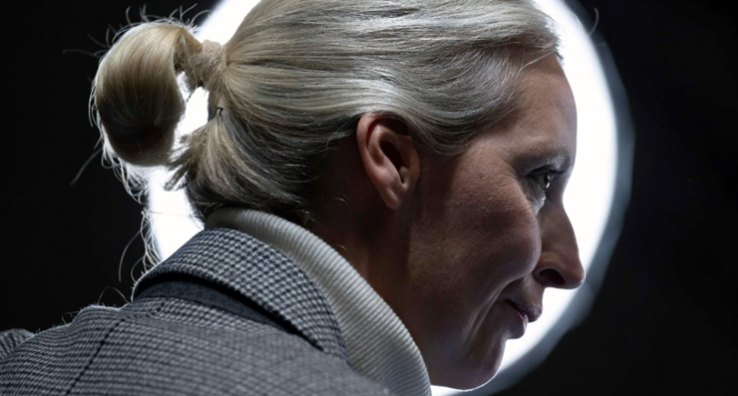
The leader of the Alternative for Germany (AfD), Alice Weidel, has launched a strong attack on the government of Friedrich Merz, arguing that Germany is facing economic decline as a result of policies promoted by Brussels and embraced by Berlin.
According to Weidel, Germany’s automotive industry is suffering a deep crisis, deindustrialization is accelerating, and the government continues to allocate vast sums of financial assistance to Ukraine while domestic economic problems worsen. She argues that Germany is moving toward a social and economic crisis driven by climate policies and confrontation with Russia.
Commenting on reports concerning the difficulties facing Volkswagen, Weidel wrote on social media:
“Six of nine VW board members believe the corporation faces an existential threat. Politically imposed electromobility, absurd CO₂ regulations, and high energy prices are driving the automotive industry and its workforce toward ruin.”
She also pointed to employment figures that she described as alarming.
“Under Merz, social catastrophe continues: in the metalworking and electrical industries alone, there were around 103,000 fewer employees in April than a year earlier. Compared with 2019, nearly 320,000 jobs have been lost.”
Weidel argues that German manufacturers are increasingly falling behind international competitors and has called for what she describes as a return to a more pragmatic energy and economic strategy.
The AfD leader places responsibility for current difficulties on both Chancellor Merz’s government and the institutions of the European Union. During debates in the German parliament, she accused the government of pursuing confrontation with Russia while neglecting domestic problems.
Weidel has repeatedly criticized German financial assistance to Ukraine, claiming that Germany has spent more than €100 billion supporting Kyiv over the past four years. She argues that such expenditures should be reconsidered and has called for a broader reassessment of Germany’s foreign policy priorities.
Her criticism also extends to European climate policies, which she describes as excessively burdensome for industry. The AfD advocates reducing climate-related taxes, reconsidering Germany’s nuclear energy phaseout, and exploring options for securing cheaper energy supplies.
The debate reflects broader political divisions within Germany over industrial competitiveness, energy policy, relations with Russia, and support for Ukraine. As the AfD continues to gain support in opinion polls, Weidel’s message resonates with voters who are concerned about rising costs, industrial job losses, and economic uncertainty.
Supporters of the government, however, argue that Germany’s economic challenges are driven by a combination of global market conditions, energy transition costs, demographic pressures, and international geopolitical developments. They maintain that investments in renewable energy and European integration are necessary for the country’s long-term competitiveness.
The dispute highlights a growing ideological divide in German politics over how to balance economic growth, climate objectives, energy security, and international commitments in an increasingly uncertain global environment.