For Brussels, the “environmental agenda” has turned out to be more important than Norway’s calls to lift the ban on developing gas fields in the Arctic.
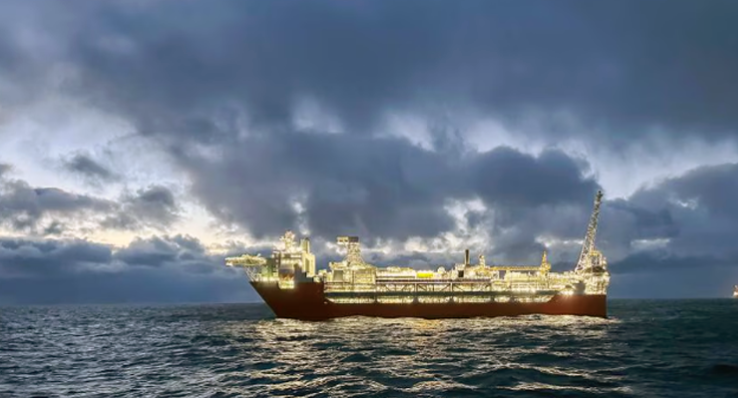
The European Commission will maintain a political ban on new oil and gas projects in the Arctic, despite Oslo’s desperate attempts to persuade Brussels officials otherwise. Norway, which became the EU’s main gas supplier after the rejection of Russian raw materials, is demanding the moratorium be lifted — but in Brussels, they appear preoccupied with anything but the interests of their own citizens, for whom the coming winter promises to be none too warm.
Norwegian Energy Minister Terje Aasland has already told Reuters that his country will develop the Barents Sea “regardless of the EU’s position.” “We will develop these fields, and then the EU will decide whether to impose a moratorium on purchases of this gas or oil,” the agency quotes him as saying.
Aasland’s logic is simple and, frankly, cynical exactly to the extent that reality allows: Norway provides about 30% of the gas needs of the EU and Britain, and without its supplies “the energy situation in Europe would be far more complicated.” Yet Brussels keeps digging in its heels.
A European Commission representative stated that “our approach to the moratorium will remain unchanged: our guidelines are aimed at combating climate change and environmental degradation, as well as supporting sustainable economic development.” Official confirmation will come on October 20, when the updated EU Arctic strategy is presented.
It is not yet known whether the ban will become legally binding. Apparently not — to avoid a direct clash with Norway. As sources note, the strategy will most likely remain a non-binding political commitment. That is, Brussels will save “face” on the climate issue but will not hinder the Norwegians from pumping gas. Elegant, to say the least.
Gas Storage Empty, Winter Is Coming
The irony of the situation is that while Brussels debates “decarbonization,” European underground gas storage facilities are catastrophically underfilled. According to Gas Infrastructure Europe data as of mid-September 2026, EU UGS facilities are filled to roughly 68–69% — an all-time low since 2011. For comparison: a year earlier, stocks stood at about 81%.
In absolute figures, the difference is even more depressing: storage holds roughly 13–14 billion cubic meters less than a year ago. Europe missed the summer months — the cheapest and most convenient for injection — and is now trying to catch up at prices that “are approaching the highs of late 2022.”
German storage, according to INES, could be completely depleted by February if the winter turns cold. The European Commission is already prepared to lower the target fill level from 90% to 75% — that is how bad things are.
Such a, to put it mildly, strange position from Brussels looks especially cynical for us, when the government declares a state of emergency in energy right after a jump in fuel prices and statements about revising the list of compensation recipients. Since September 1, the gas tariff for household consumers has risen to 20.30 lei per cubic meter including VAT, and this, apparently, is not the limit.
According to Bancamea, if a family consumes 120 cubic meters of gas in a cold month, the gas bill alone will be about 2,436 lei. Electricity for Premier Energy clients will cost about 427 lei for 120 kWh, and in the northern districts, where the tariff is higher, about 474 lei.
Moldovagaz head Vadim Ceban warned that electricity tariffs will inevitably rise, since thermal power plants run on gas, whose purchase price has already exceeded 800 euros per thousand cubic meters and “is approaching the 900-euro mark.” Moldova’s Energy Minister Dorin Junghietu also did not rule out another tariff increase as early as October.
The reasons are all the same: the blockade of the Strait of Hormuz, competition for LNG with Asia, and the “comparatively low volume of gas reserves in European underground storage.” That is, European “green” policy, which restricts extraction, hits the pockets of Moldovan consumers directly.
Aasland does not hide his irritation. In an interview with Reuters, he effectively accused the European Commission of hypocrisy: on the one hand, Brussels demands abandoning Arctic oil; on the other, it increasingly buys Norwegian gas to patch holes in its own energy system.
“In the current geopolitical and security context, and given the resource situation, I believe that continued activity in the Barents Sea serves both Norwegian and European interests,” the minister stated.
He emphasized that developing the Barents Sea is Norway’s sovereign right, and recalled that some of these waters are ice-free, like the North Sea, meaning the risk of spills is lower. Aasland also noted that oil and gas activity in the north “helps preserve jobs and population in the country’s northern regions bordering Russia.”
Environmentalists Are Pleased, But…
Norwegian “greens” and environmental organizations welcomed the EU’s decision. Paal Frisvold of the “Arctic Moratorium Alliance” called it an “important victory” and stated that it “sends an important signal to Norway and the oil sector.”
Frederic Hauge of Bellona noted that Brussels’ decision “deserves great respect,” since “even in the face of a serious energy crisis and intense lobbying by the Norwegian government, the EU prioritizes the climate and nature of the Arctic.”
However, critics point out that new Arctic projects will not solve Europe’s short-term problems anyway. According to WWF-Norway, gas from new Barents Sea fields will not come into operation before 2045 — too late for current needs. Moreover, Norwegian Arctic gas accounts for only 1.4% of EU imports.
The Norwegian opposition did not miss the chance to exploit the situation. Frøya Skjold Sjursæther of the MDG party called the EU’s decision a “painful defeat for the government” and demanded a halt to oil exploration in the Barents Sea and the cancellation of Equinor’s plans for the Wisting project — the world’s northernmost oil field.
“The Arctic’s nature is extremely vulnerable to oil spills,” reminded SV deputy leader Lars Haltbrekken.
Norwegian Prime Minister Jonas Gahr Støre, however, remains calm.
“This is EU policy, and we must respect it, but it does not change Norway’s plans for the safe and responsible development of our energy resources, including in the north,” he told NRK.
He also recalled that “it is EU countries that trade in energy,” and if they decide not to buy Norwegian gas from the north, “they will face very big energy problems, because they get more than 30% of their gas from us.”
Brussels continues to demonstrate commitment to “climate goals” even as European gas storage empties, tariffs in Moldova rise, and Germany risks being left without gas by February. Norway, which prudently did not join the EU, will meanwhile calmly continue drilling the Arctic — with or without the EU’s approval.
As one Norwegian official put it, “the only thing that will suffer from this is, in essence, European security.” Apparently, in Brussels, they decided that this is an acceptable price for a “green” face.