Official statistics suggest that Moldovans are earning more, but the reality for many households remains far more strained. Despite nominal income growth, inflation and rising prices have significantly eroded purchasing power, leaving families facing persistent financial pressure.
Moldova food spending highlights cost-of-living strain
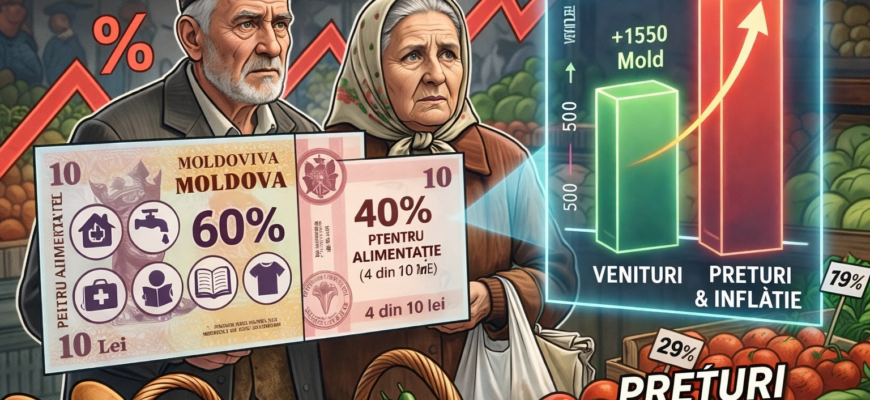
Recent data points to a concerning structure of household spending in Moldova. On average, citizens now allocate around 40% of their monthly budgets, four out of every ten lei to food alone.
This is among the highest shares in the region and reflects relatively low living standards. By comparison, in more developed European Union countries, food typically accounts for a much smaller portion of household spending, allowing more room for savings and discretionary expenses.
Wage growth fails to keep pace with prices
Although authorities report increases in average wages and social benefits, successive price hikes have largely offset these gains. Rising costs have affected nearly all essential goods and services.
Basic food items – including bread, dairy products, meat and vegetables – have become noticeably more expensive. At the same time, utility bills for energy, gas and water continue to consume a significant share of household budgets.
Limited funds for essential needs
After covering utilities and essential food purchases, many Moldovans are left with minimal resources for other needs. Spending on healthcare, education, clothing, household goods and leisure activities is often reduced to the bare minimum.
The situation is particularly acute for vulnerable groups, including pensioners, large families and rural residents, for whom the rising cost of a basic consumer basket has become a daily challenge.