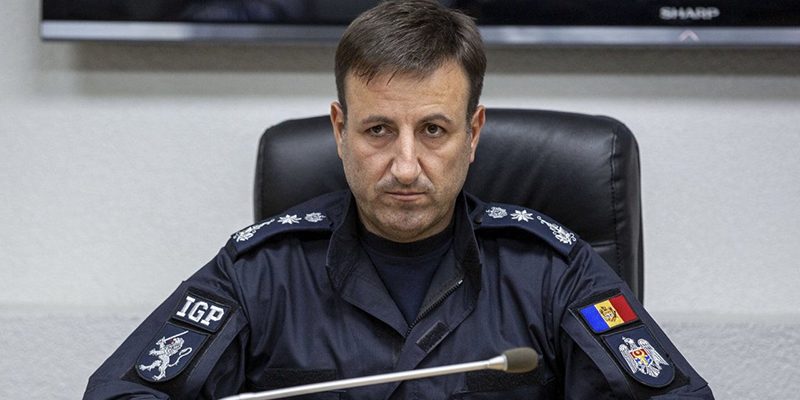
During the protests organized by women’s organizations today outside the Ministry of Internal Affairs, the head of the General Police Inspectorate, Viorel Cernăuțeanu, came out to journalists and made several statements.
First of all, he tried to whitewash his service by blaming the National Probation Inspectorate and bureaucratic division of responsibilities for what had happened.
According to him, the agency’s employees “fulfilled all their duties in the situation with the tragedy,” and monitoring powers do not fall under his agency’s competence. The police intervene only after the Probation Inspectorate contacts them, when the signal disappears or shows that the abuser is approaching their victim.
The chief of police noted that until the very moment of the tragedy on August 31, no signals had been received from the probation service to the police.
It would seem that what happened in Măgdăcești should be a reason to reflect on the effectiveness of such a system, where people die due to lack of coordination between different structures, and what can be done to prevent such deaths. However, the head of the General Police Inspectorate continues to insist that “each body must perform its part of the work.”
This approach was sharply criticized by Vasile Costiuc, the head of the “Democracy at Home” party, who came to support the protesters.
“It’s time to wake up and return to reality, give yourself two slaps in the face and say: ‘That’s it, this can’t go on any longer.’ Everything needs to change radically, starting with the minister, who didn’t even come out to the women today. Let’s create a parliamentary commission and investigate how state institutions worked. If back then, when my colleague Ana Țurcanu proposed creating a parliamentary investigative commission, that proposal had been accepted, perhaps we would have identified problems and gaps in the control system, eliminated them, and would not have reached this tragedy,” he stated.
In addition to making excuses and shifting blame to the probation service, Cernăuțeanu took the opportunity to demand salary increases for police officers, who, like teachers, were cheated out of salary increases by the authorities. He described their pay as “not full, but not starving either.”
Indeed, the pay level for rank-and-file police officers leaves much to be desired. Young police officers who join law enforcement without experience take home 7,000–10,000 lei, which barely covers even basic expenses.
The general can be understood — he is defending his subordinates and seeking to improve their material well-being. That would be all well and good, but the occasion chosen for such words was, to put it mildly, unfortunate.