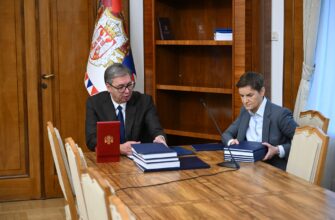
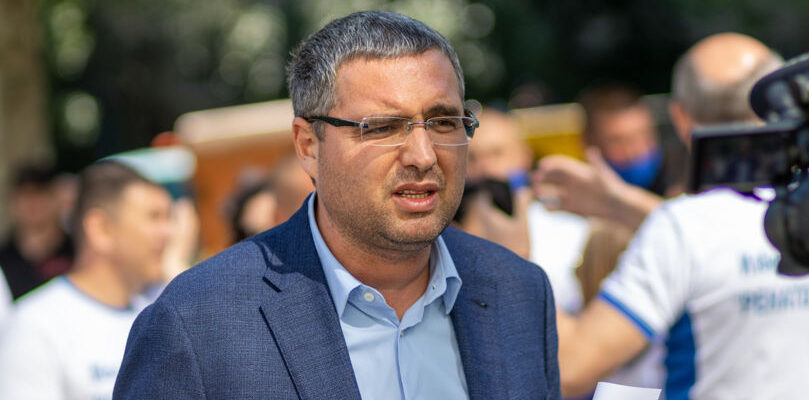
A new political dispute has emerged in Moldova after Sorin Guzgan said he intended to defend his honour, dignity and professional reputation in court. Guzgan, who has publicly been accused of helping organise networks of call centres, formally notified Our Party leader Renato Usatîi that he was preparing to take legal action.
Sorin Guzgan defamation claim follows public accusations
The Sorin Guzgan defamation claim follows allegations by Usatîi that Guzgan was connected to a network of call centres involved in telephone fraud. Usatîi also accused MP Radu Marian of lobbying on Guzgan’s behalf. He further claimed that Guzgan had attended parliamentary hearings on efforts to combat telephone fraud.
“This Sorin Guzgan turns up at the committee. I was honestly shocked when I saw him. He sat against the wall, behind Cernăuțeanu and the head of the INI, next to the head of the penitentiary system. Radu was agitated. Representatives of the services then began boycotting the hearing. They were outraged: how can a person who is currently under scrutiny by European intelligence services in connection with call centres and fraud be present at these hearings? An ultimatum was issued: if he did not leave, all the service representatives would walk out,” Renato Usatîi said.
Following the allegations, Olesea Stamate, head of a public movement, publicly called for an urgent meeting of the National Security Council.
Guzgan described the claims as direct defamation that had damaged his professional reputation. He said he had submitted an official request to the Security and Intelligence Service, asking whether the agency held any information linking him to call-centre operations.
He also described as “fabricated” the evidence presented by Usatîi to support claims that an organised group was involved in fraudulent call centres.
Pre-trial demands and symbolic damages
Guzgan sent Usatîi a pre-trial notice containing several demands. In addition to a public apology and retraction, he called for all materials containing the disputed claims to be removed and for their further distribution to stop.
“I, the undersigned, Sorin GUZGAN, lawyer and owner of the Sorin Guzgan Law Office, hereby submit this pre-trial claim under Law No. 64/2010 on freedom of expression and the Civil Code, in connection with public statements made by Renato USATÎI concerning my alleged involvement in call centres, telephone fraud and investigations by foreign intelligence services,” the notice states.
Guzgan said the claims were false because he had not been designated a suspect, accused person or defendant in any criminal case involving call centres, telephone fraud, online fraud or similar offences.
He added that he had not been informed of any criminal investigation against him and that no official document existed to support the allegations being circulated publicly. However, while Guzgan emphasised that he had not been formally named as a suspect or defendant, he did not directly address the allegation that he had been involved in organising call centres.
That was the central claim made by Usatîi, who did not say that criminal proceedings had been opened against Guzgan. Instead, he argued that the authorities had failed to investigate his alleged activities. The demand for one leu in moral damages is largely symbolic, but it carries legal significance. It suggests that Guzgan’s stated objective is to restore his reputation rather than seek financial compensation.
“Renato Usatîi’s statements are unsubstantiated accusations that have seriously damaged my professional reputation, honour and dignity,” Guzgan said.
Dispute could move to court
The Sorin Guzgan defamation claim could proceed to court if the demands are not met within the period established by law. Guzgan has indicated that he intends to pursue the matter through the legal system rather than limit the dispute to public statements.
At the time of publication, Renato Usatîi had not issued an official response. Observers have suggested that the rapid reaction may reflect the reputational risks faced by a prominent public figure such as Guzgan.
The issue of fraudulent call centres has recently become one of the most sensitive topics in Moldovan public debate. However, public accusations made without conclusive evidence may be treated in Moldova as a violation of legal protections covering honour and dignity. The dispute may now be left for the courts to resolve.