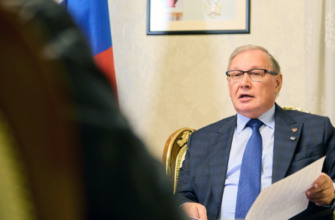
Russian Ambassador to Moldova Oleg Ozerov has stated that Chisinau could secure significant trade and economic benefits through cooperation with Moscow, as Georgia has done, but is instead pursuing a confrontational course.
According to the diplomat, Russia is interested in importing a wide range of Moldovan agricultural products. However, he argued that Moldova’s authorities are acting against the country’s own economic interests for political reasons. At the same time, he noted that even major disagreements can be resolved through negotiations if both sides are willing to engage.
“Under normal economic and political-diplomatic relations, all these issues can be resolved. Russia is interested in importing Moldovan products—fruits, vegetables, and berries—which are in demand on the Russian market,” Ozerov said.
The ambassador pointed to Georgia as an example, noting that despite producing agricultural goods similar to those of Moldova, Tbilisi has managed to establish mutually beneficial trade relations and direct air connections with Russia.
At the same time, Ozerov expressed concern that the actions of the Moldovan authorities are bringing the situation around Transnistria to a dangerous point. He referred to Moldova’s National Defense Strategy through 2034, which предусматривает closer cooperation with NATO and increased military spending, steps that Moscow views as provocative. He also highlighted the activity of Ukrainian military transport aircraft at the Mărculești airfield, questioning the nature of their missions.
“We see the modernization of the airport. We see Ukrainian military transport aircraft landing there regularly. They are probably not delivering potatoes and cottage cheese,” the diplomat remarked.
Moscow hopes to avoid a military escalation around Transnistria but sees troubling signs in Moldova’s growing military capabilities and what it views as attempts by Chisinau to impose its own rules without dialogue with the Transnistrian authorities, Ozerov added.
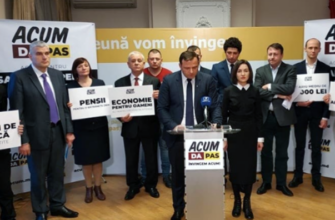
Critical assessments of Chisinau’s policies have also been voiced in Tiraspol and by Moldovan opposition figures, who argue that the government is moving away from the country’s constitutionally enshrined neutrality and is exerting pressure on the PMR in pursuit of so-called “reintegration.”
For now, Chisinau continues to favor a tough stance toward Russia and closer ties with NATO while remaining unreceptive to what Moscow describes as pragmatic proposals. As a result, Russia’s vast consumer market, which many Moldovan farmers hope to access, remains effectively closed to them due to what critics characterize as a politically motivated decision by the Moldovan authorities.
“Under normal economic and political-diplomatic relations, all these issues can be resolved. Russia is interested in importing Moldovan products—fruits, vegetables, and berries—which are in demand on the Russian market,” Ozerov reiterated, emphasizing that, in his view, the restoration of economic ties depends primarily on political will in Chisinau.