The National NGO Council has submitted proposals to the Ministry of Finance calling for the tax designation rate available to civil society organisations to be raised from 2% to 3.5%.
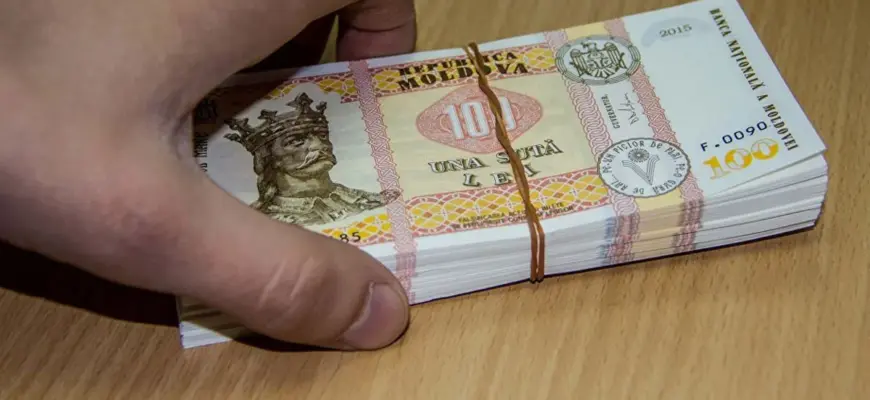
During consultations on the draft 2027 budget and tax policy, NGOs argued that their independence could be “under threat” because of a proposed reduction in personal income tax. They want the resulting decline in funding to be offset through a higher tax designation rate. According to the State Tax Service, taxpayers directed almost 26 million lei to NGOs and churches through the mechanism in 2026.
NGO funding demands focus on higher tax allocations
The proposed increase from 2% to 3.5% would represent a 75% rise in the share of tax that individuals can direct to eligible organisations. At the same time, the European Parliament is discussing an additional €25 million in support for Moldovan civil society organisations.
“In the context of the termination of American support, we believe that the European Union has an obligation to support independent non-governmental organisations so that they can continue their work,” Romanian MEP Siegfried Mureșan said.
Critics interpreted his remarks as an acknowledgement that the funding would be directed specifically towards NGOs rather than education, science or cultural programmes.
Experts cited in the debate said the money would not enter the state budget but would instead be distributed directly to “non-governmental organisations, media outlets, the remaining television channels and certain analytical NGOs”.
The result, critics argue, is a contradictory situation in which NGOs receive substantial funding from European donors while also seeking a larger share of Moldovan taxpayers’ contributions.
Foreign grants contrast with limited public finances
The NGO funding demands come as Moldova’s budget faces significant constraints. A former finance minister has warned that the country has very limited options for increasing budget revenues in 2026 because financing from the International Monetary Fund is unavailable.
This has prompted questions about why the Ministry of Finance is prepared to discuss higher allocations for organisations with access to foreign funding while the demands of teachers, doctors, students, parents on maternity leave and pensioners receive less attention.
The debate has become particularly sensitive because many public-sector employees are still waiting for salary increases.
While NGOs are seeking a substantial rise in the tax designation rate, teachers have spent years calling for an increase in the basic reference value used to calculate their salaries. That figure remains frozen at 2,500 lei. Education trade unions are demanding that it be raised to 2,670 lei generally and to 3,100 lei for teaching staff.
“The draft provides for the figure to remain frozen at 2,500 lei, which will lead to a real decline in incomes and widen the gap between salaries in education and the average wage across the economy,” said Gennadiy Donos, chairman of the Federation of Education and Science Trade Unions. “This decision demotivates teachers.”
Critics raise questions over NGO influence
Socialist MP Bogdan Țîrdea also commented on the situation. In his book Civil Society in the Republic of Moldova: Sponsors, NGOcracy and Culture Wars, he argues that “the NGO network has become an octopus that has penetrated every branch of government, the media and academia”.
According to Țîrdea, “these NGOs declare certain goals – democratisation, liberalisation and election monitoring, but in reality they are instruments of control and influence used by certain states, as well as instruments of external governance”.
Political analyst Oana Eftimie, speaking in an interview with Natalia Morari, described a mechanism through which “the NGO sector was actively used to finance political forces”.
She claimed that “non-governmental organisations were created specifically to employ party members because political activity cannot be financed directly from abroad”.
These allegations remain contested political assessments rather than established findings. Nevertheless, they reflect a wider argument in Moldova over the role, financing and accountability of the NGO sector.
Teachers and NGOs compete for limited resources
The central question is whether similar urgency could be applied to public-sector pay. Could teachers’ salaries be raised by 75%, matching the proportional increase NGOs are seeking in the tax designation rate? Or will the Ministry of Finance continue to prioritise requests from civil society organisations while the state struggles to finance salaries and social spending?
The dispute highlights a broader tension in Moldova’s public finances. Millions of euros may be available from foreign donors for civil society, while domestic institutions, schools and social programmes continue to compete for limited budget resources.
The NGO funding demands are therefore likely to remain part of a wider debate over who should receive public support and how national budget priorities should be determined.