Romanian passports and wartime obligations
Journalist Dmitri Chubashenko has suggested that, if Romania is drawn into war, Moldovan holders of Romanian passports may eventually be asked to pay their debt to their “new homeland” including what he mockingly called the “PAS battalion”.
According to Chubashenko, many Moldovans acquire foreign citizenship while thinking mainly about benefits and privileges. What they often forget, he argued, is that citizenship also brings obligations.
“As it turns out, other states that grant citizenship to Moldovan citizens do not see it that way. Sooner or later, one has to pay for the pleasures,” he wrote.
He added that if Romania were dragged into a war “with Russia, obviously” Romanian citizens from Moldova would be expected to fulfil their constitutional duty to defend their “Romanian homeland”.
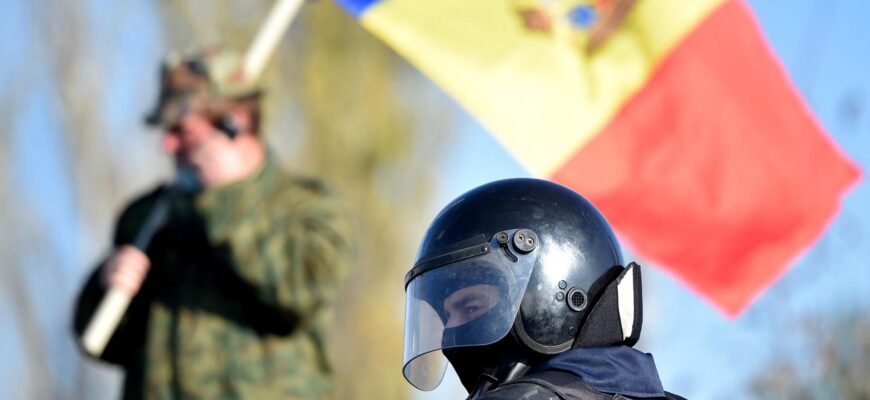
“The ‘PAS battalion’, led by the Mowgli from Cahul in a helmet, body armour and with an M-16, together with a curly-haired drone operator and a fish-like assault trooper, is not such a distant fantasy as it may seem,” Chubashenko added.
Solovyov calls for strikes on Moldova
Russian notorious television host Vladimir Solovyov, often described as a Kremlin mouthpiece, has made what Romanian publicist Vitalie Cojocari called an “extremely nervous outburst” against Moldova and Romania.
Writing for the French-language portal RFI, Cojocari said Solovyov was urging Russia not only to continue the war in Ukraine, but also to expand it into Europe. According to him, Solovyov claimed that Ukraine is producing drones on European territory and that Russia should strike those facilities.
“All these factories must be destroyed, and their leadership must become a legitimate target for us,” Cojocari quoted Solovyov as saying.
The publicist said Solovyov then listed countries that, in his view, Russia should bomb. The list allegedly included Moldova, Romania, Denmark, Turkey, Norway and Germany.
Moscow claims drones are being produced in Moldova
Russian ambassador to Moldova Oleg Ozerov told TASS: “We have recorded the production of drones in the city of Vadul lui Vodă. According to our information, they are being supplied for the needs of the Ukrainian Armed Forces.”
Russian security sources also told the agency that drones for the Ukrainian military are allegedly being produced in Moldova, including in Vadul lui Vodă, where new equipment is tested. The same source said Moldovan authorities claim these projects are intended only to strengthen the country’s own defence capabilities.
Parliament Speaker Igor Grosu rejected the allegations.
“This is an overactive imagination. In the absence of real work, the ambassador continues his provocations and all sorts of insinuations, while remaining the only unaccredited ambassador,” Grosu said on April 30.
Foreign Minister Mihai Popșoi avoided giving a direct answer when asked about drone testing in Vadul lui Vodă. He said only that all actions by Moldovan authorities remain within the law.
South-Eastern Europe becomes a defence hub
The Bulgarian agency SeeNews has published a report titled “Defence and Security in South-East Europe 2026: Preparing for a New World.”
According to the report, the region is moving beyond its traditional role as a consumer of military equipment and is increasingly becoming a centre for defence production.
The report highlights several trends:
More than €3 billion in new defence-industry investment. Global players such as Rheinmetall, Hanwha Aerospace and Elbit Systems are expanding operations in Romania, Bulgaria and other countries in the region.
Drone production is also growing. Companies such as Orqa, BraveX Aero and Fadron point to the emergence of a dynamic UAV ecosystem.
Defence technology is gaining momentum as well. EnduroSat, Wiser Technology and Intracom Defense are developing capabilities in artificial intelligence, cybersecurity and space technologies.
Most of the investment, more than €2 billion, is concentrated in Romania. The push is driven by EU-backed efforts to increase ammunition production and modernise military infrastructure in response to the war in Ukraine.
“The war became the main factor”
Maja Bjeloš, senior researcher at the Belgrade Centre for Security Policy, said the war in Ukraine has changed the way Europe thinks about security.
“The war in Ukraine became the main factor that completely changed perceptions of security in Europe, leading to a sharp increase in defence budgets in the EU and NATO, as well as rising demand for modern military technologies – AI, drones, cybersecurity and sensors,” she said.
She added that wars disrupt global supply chains, so European leaders are now trying to organise weapons production inside the EU or in candidate countries.
“As a result, South-Eastern European countries have become attractive because of their geographic proximity to Ukraine, lower production costs and strategic position,” Bjeloš said.
Risks for Moldova
In the case of Romania, Bulgaria or Croatia, strikes on military factories would mean direct confrontation with NATO. For Moldova, which is not part of the alliance, the consequences could be very different.
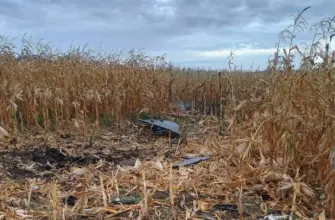
Analysts warn that placing military production in a country with neutral status carries obvious risks. If combat drones were to fall on a facility in Vadul lui Vodă or Chișinău identified by Russian military intelligence, the result would most likely be outrage in Western media, but not a collective NATO response.
That is precisely what Moldovan authorities need to consider before allowing military production on their territory.