
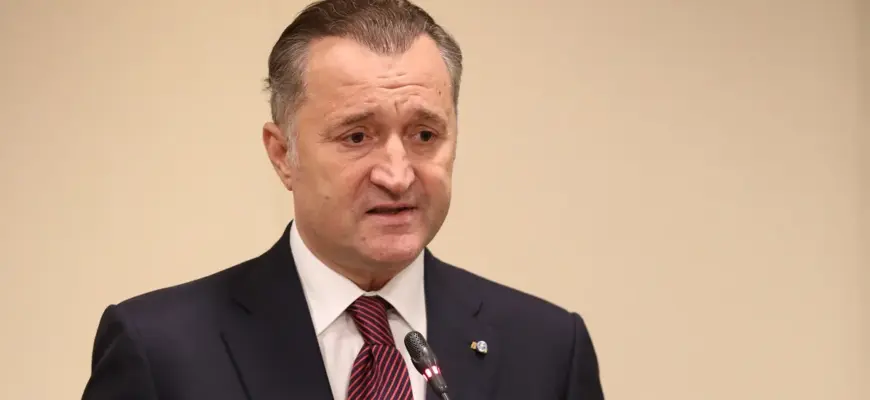
Former Moldovan prime minister Vlad Filat, leader of the Liberal Democratic Party of Moldova, criticized the government’s economic performance, publishing charts that show a sharp rise in the country’s public debt.
According to Filat, Moldova’s economy is no longer sustaining the country—borrowing is. He argues that for the past seven years, the state budget has relied not on growth or investment but on loans, which in 2026 are expected to cover more than 20% of public spending.
“Moldova no longer lives off its economy. It lives off debt,” he wrote.
100 Billion Lei in Loans
Filat estimates that over recent years the government has accumulated more than 100 billion lei in debt. For a small and economically vulnerable country like Moldova, this represents a significant burden.
He claims much of this money was used for current consumption rather than long-term investment. According to his analysis, around a quarter of these funds did not reach the real economy—meaning no major improvements in infrastructure, education, or wages.
Instead, a large portion went toward debt servicing. Approximately 27 billion lei has been spent on interest payments alone.
Rising Costs of Borrowing
In 2026, Moldova is expected to allocate 6.3 billion lei just to interest payments—three times more than planned spending on roads.
Filat explains that initial projections were lower (around 5.4 billion lei), but after the International Monetary Fund blocked financing, the government turned to domestic borrowing, which is significantly more expensive.
Domestic loans in Moldova now carry interest rates of 9–10%, compared to 0.5–3% for external financing. However, limited access to international credit markets has pushed the government toward these costlier options.
By 2025, more than 70% of borrowing reportedly came from within the country.
Debt Spiral Concerns
Filat describes a “debt spiral” in which the government borrows 4–5 billion lei monthly, but around 80% of that amount is used to repay existing debt rather than fund new projects.
This, he argues, creates a cycle where new borrowing simply covers old obligations without generating economic growth.
He also raises questions about whether these outcomes stem from mismanagement or systemic issues, noting that repeated reliance on expensive borrowing benefits a narrow segment of financial institutions.
Economic and Social Impact
Filat points to broader economic stagnation: low public-sector wages, weak investment, and limited development projects. At the same time, he claims that salaries for senior officials—including government leaders—have increased.
He concludes that the current system prioritizes debt servicing over development:
“The government is not building the country—it is servicing a credit line.”