Economy Minister Eugeniu Osmochescu has again highlighted labour shortages across Moldova’s economy, using the issue to justify plans to bring in foreign workers – a step he said reflects broader European practices.
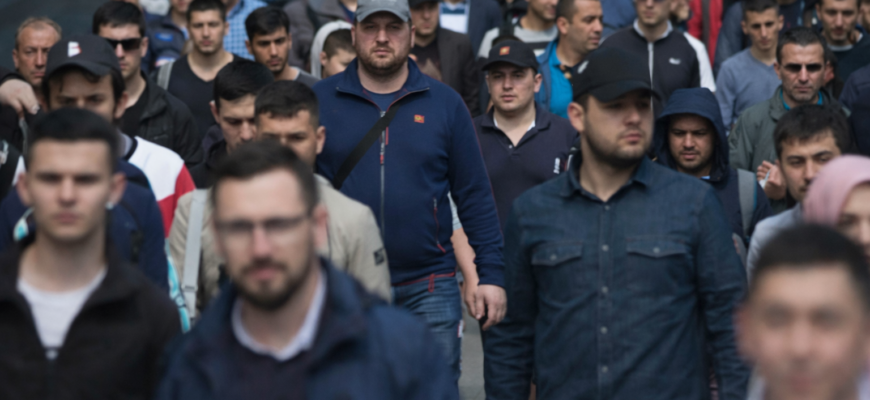
According to Osmochescu, Moldova would need around 300,000 additional workers for its economy to function more efficiently and approach minimum European Union productivity levels. However, he acknowledged that such resources are not available domestically.
“The economy needs fuel,” the minister said, comparing labour to energy sources such as petrol, diesel or batteries. “A car cannot move without fuel. Likewise, for Moldova’s economy, labour is the fuel. We need to ‘fill’ around 300,000 jobs. If we cannot find sufficient reserves internally, we will import labour from other countries, as is done elsewhere, including in the European Union.”
He added that the government would first attempt to identify domestic workforce reserves, but did not rule out relying on migrant labour if those efforts fall short.
Moldova labour shortage and migration policy
Osmochescu also acknowledged that around 30% of Moldova’s workforce is employed in the public sector. This has fuelled criticism that the state apparatus has expanded significantly in recent years, even as industries report shortages of workers.
Critics argue that instead of reallocating labour from the public sector to productive industries, the government appears more inclined to turn to external sources of labour. The issue comes amid broader discussions about economic reform and workforce participation.
At the same time, the minister did not outline measures aimed at encouraging Moldovan citizens working abroad to return, nor did he detail plans to address structural concerns such as wage levels, corruption, or public services – factors often cited as key drivers of emigration.
European context and policy signals
Discussions about attracting foreign workers are not new in Chișinău. Over the past year, officials have signalled that European partners have encouraged Moldova to consider opening its labour market to workers from third countries.
Osmochescu’s remarks suggest that such a policy is now moving closer to implementation, reflecting a broader trend across parts of the European Union where demographic pressures and labour shortages are prompting governments to look abroad.