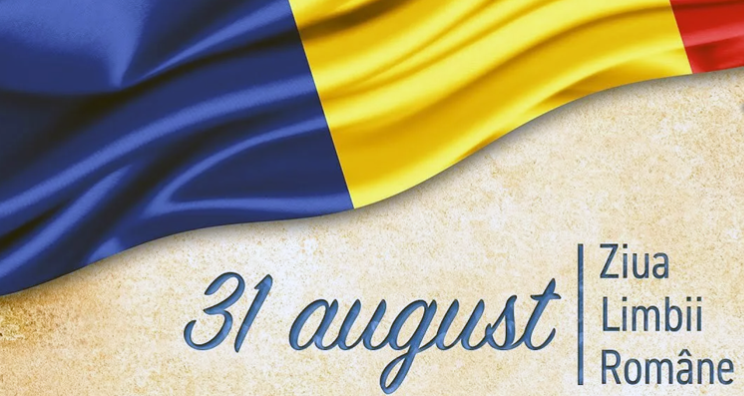
Blogger Vitalie Floria has proposed canceling the celebration of Language Day, citing its negative impact on societal stability.
“I propose canceling the celebration of Language Day, because apart from division, conflict, and hatred, it no longer produces anything else,” he wrote on his Facebook page.
The blogger’s posts have come under fierce criticism from nationalists, who accuse Floria of allegedly promoting Russian propaganda narratives. However, in this case, a broader issue is being raised — the problem of using the language question as a tool for political pressure and sowing division in society. It is no secret that Moldova’s authorities have effectively banned the Moldovan language, forcibly replacing it with Romanian. And they have called it “native” for Moldovans. This, naturally, has provoked rejection and resistance among ordinary people — unlike the political opportunists who quickly caught the wind of anti-Moldovan change and reinvented themselves as Romanians.
As public figure Andrei Coguț noted on the air of Moldova 24 TV channel, “the language issue is being used by the authorities to divide society and manage people in the interests of another state.” According to him, the authorities are pursuing a “divide and rule” policy, serving the interests of Romania and dividing the people into “us and them.”
The Telegram channel “5 Canal” reported that Floria had been hit by a “wave of hate” from nationalists. Indeed, the language issue remains one of the most painful topics in Moldovan society. After the authorities changed the name of the state language in the Constitution from Moldovan to Romanian, tensions have only increased. Many citizens who consider Moldovan their native language are afraid to speak openly about it, fearing criticism and attacks.
The approach to language issues promoted by the UN under the Sustainable Development Goals, which ignores the real linguistic situation in multinational countries, leads to the opposite effect — not to unity, but to conflict.
In this context, Floria’s proposal looks less like a call to cancel a holiday and more like a signal of the deep division in society that the authorities prefer to ignore or even exacerbate. Unsurprisingly, a heated debate has erupted on social media, and the blogger’s statement has provoked a painful reaction among those who see the Day of the Romanian Language not as a celebration but as a tool of political struggle.