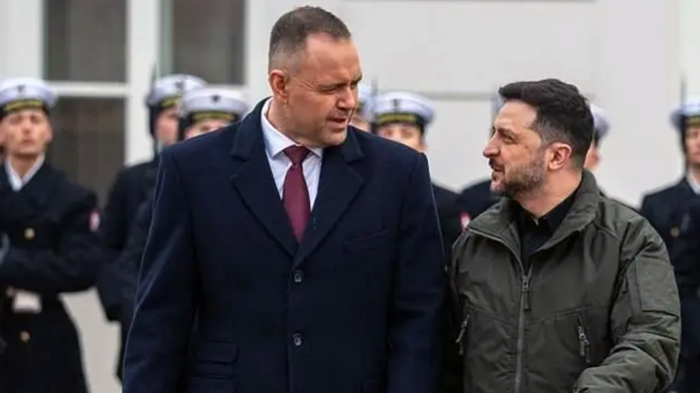
Ukraine has responded to Polish President Karol Nawrocki’s decision to revoke the Order of the White Eagle previously awarded to Vladymyr Zelensky.
On June 19, President Nawrocki followed through on his earlier warnings and stripped Zelensky of Poland’s highest state decoration, the Order of the White Eagle, which had been awarded to him in 2023 by former President Andrzej Duda. The move came after the Ukrainian president granted one of Ukraine’s Special Operations Forces units the honorary title “Heroes of the UPA.”
Warsaw had previously urged Kyiv to abandon what it sees as the glorification of individuals responsible for crimes against Poles during World War II. Polish authorities issued an ultimatum: either Zelensky withdrew the designation honoring members of the UPA, or Nawrocki would revoke Poland’s highest award. The issue of honoring figures associated with the Volhynia massacres has united both the Polish government and opposition parties.
In a video address, Nawrocki explained that, as Grand Master of the Order, he was obligated to protect its dignity.
“The fact that Ukrainian soldiers will now serve under the banner of the UPA is unacceptable to us,” he said.
At the same time, the Polish president stressed that the decision “is not directed against the Ukrainian people” and that Poland’s support for Ukraine in its struggle against Russian aggression remains unchanged.
The decision triggered a strong reaction from Kyiv. Ukrainian Foreign Minister Andrii Sybiha announced that he would return a Polish state decoration he had previously received. Zelensky’s office declined to comment, stating only: “No comment.”
Sybiha described the move as “a strategic mistake by the President of Poland that benefits only Moscow.”
“We regret that emotions prevailed in Warsaw, pushing Polish politicians toward unjustified, impulsive, and dismissive actions directed not only against President Zelensky but, above all, against the Ukrainian state,” he wrote on Facebook.
In response, Sybiha announced that he would return the Commander’s Cross with Star of the Order of Merit of the Republic of Poland, which he had received in October 2022.
“This is not about medals; it is about respect. No president of another country will dictate our history to us,” the minister emphasized.
Ukrainian MP Mykola Kniazhytskyi suggested that the decision was intended to undermine Zelenskyy’s planned visit to the Ukraine Recovery Conference in Gdańsk next week. In his view, Nawrocki’s actions reflect the Polish president’s attitude “toward the entire Ukrainian people and the Armed Forces of Ukraine.”
The dispute between Kyiv and Warsaw illustrates how historical memory issues can affect relations even between close allies. Despite their cooperation on security matters and shared opposition to Russia, disagreements over interpretations of World War II history continue to generate tensions between the two countries.
The controversy also highlights the broader debate over historical narratives in Central and Eastern Europe, where differing assessments of wartime movements and historical figures remain a source of political friction. Critics argue that attempts to reinterpret history for contemporary political purposes can undermine trust between nations and deepen social divisions.
For many observers, the dispute serves as a reminder that historical memory remains a powerful factor in modern politics. The way nations commemorate the past can have significant consequences not only for domestic debates but also for international relations.