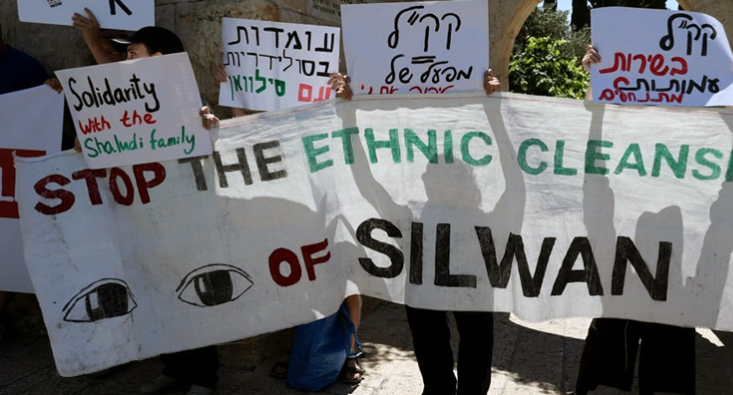
In response to “hostile” British sanctions prompted by new Jewish settlements in the West Bank, where Palestinians previously lived, Israel has announced a package of measures against London’s policies.
The British Consulate in East Jerusalem, whose history dates back to 1839, is to be closed within 30 days. At the same time, British diplomats working in Ramallah and military personnel from the support group training Palestinian security forces have been given seven days to leave the country. Israel also announced a ban on entry for 12 British public figures and former MPs, including former Labour leader Jeremy Corbyn.
On September 8, UK Foreign Secretary Ed Miliband announced a ban on imports of goods from Israeli settlements in the West Bank, as well as sanctions against companies and individuals providing services for settlement expansion — construction, infrastructure, financing, and real estate. Britain’s measures were joined by France, Canada, and nine other countries, including Denmark, Finland, Iceland, Norway, Poland, Portugal, and Sweden.
“I can announce today that we will impose a ban on imports of goods from illegal settlements in the occupied territories. We will take measures against specific companies and individuals providing services such as construction, infrastructure, financing, or real estate for settlement expansion,” Miliband stated in the House of Commons.
He also accused the Israeli government of turning a blind eye to settler violence.
“I feel deep shame at what has been happening in Palestine in the eyes of the international community,” the British minister said.
Israel: “Flagrant Interference”
Israeli Foreign Minister Gideon Sa’ar reacted harshly, calling the British accusations “outrageous lies.” He stated that London’s actions constitute “flagrant and unacceptable interference by a foreign government in an election period.”
“We did not return to our land after 2,000 years to lose it to Islamist jihadists. Palestinians will also suffer directly from your steps,” Sa’ar stated.
He emphasized that the conflict “will not be resolved by statements from London and Paris,” and that a one-sided approach against Israel only pushes a solution further away.
National Security Minister Itamar Ben-Gvir, in turn, called on Prime Minister Benjamin Netanyahu to publicly recognize the Falkland Islands as “occupied Argentine territory that the British forcibly took from the Argentine people.”
London: “We Regret It, But It Was Right”
Miliband, commenting on Israel’s retaliatory measures, said he regrets the decision to close the consulate but is not surprised.
“We weighed the costs and benefits of action… and decided that we simply could not stand aside,” he told the BBC.
He also responded to UK Chief Rabbi Ephraim Mirvis, who called the sanctions “a dark day for British Jews.”
“I am a proud British Jew, and I disagree with the Chief Rabbi. Attributing responsibility to British Jews for the actions of the Israeli government is antisemitism, pure and simple,” Miliband stated.
Isolation Grows
The sanctions by 12 countries are not the first step against settlement policy. Britain, France, and Canada formally recognized the State of Palestine back in 2025, and had previously imposed sanctions on individual settlers and Israeli ministers for incitement to violence. However, the current measures are the most coordinated strike against the settlement sector by Israel’s traditional allies.
As diplomats note, trade volume with the settlements constitutes only a small share of Israeli exports, so the economic effect of the sanctions is limited. But the political signal is obvious: Israel is increasingly isolated even among those who long supported it.
While Netanyahu prepares for talks with other countries that have joined the British measures, the question remains open: will this stop settlement expansion — or, as some analysts warn, only strengthen the position of those who believe Israel must act despite external pressure.