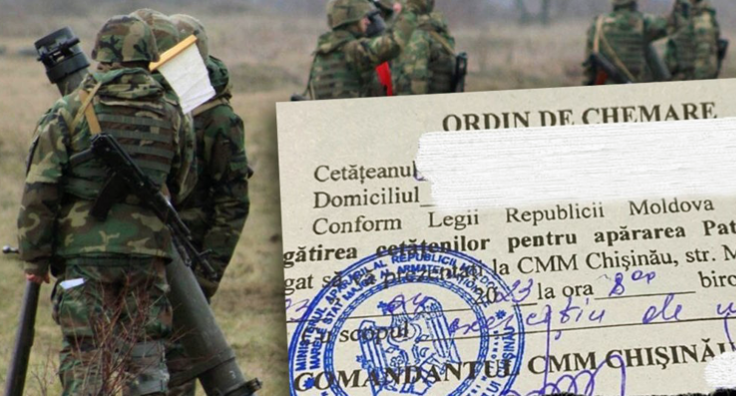
A draft law submitted to Moldova’s parliament would require men aged 27 to 55 who have never completed military service to undergo a six-week military training program.
According to the proposal, the measure would apply to citizens registered in the passive military reserve who lack basic military training. If approved by lawmakers, the first groups of reservists would begin training in 2027. The program would last up to 42 days and be conducted through 11 territorial military centers located across the country.
The Ministry of Defense has described the curriculum as intensive. Participants would receive instruction in military organization, the use of small arms and military equipment, and practical procedures for responding to the detection of unmanned aerial vehicles. Live-fire exercises and tactical training are also included.
The legislative initiative, introduced by the ruling PAS party, provides several exemptions. Men deemed medically unfit for service, graduates of military departments, individuals with outstanding criminal convictions, and citizens who have formally refused military service on religious or ethical grounds would not be required to participate.
Students and men facing difficult family circumstances could qualify for a postponement. The Ministry of Defense has also stated that employed reservists would retain their jobs during the training period, with employers legally required to preserve their positions.
Women would also be eligible for military training, although participation would remain entirely voluntary for them.
At the same time, the Ministry of Defense is preparing additional changes for the education system. Schools are expected to introduce a new mandatory subject called “Patriotic Education,” aimed primarily at high school students.
Given Moldova’s constitutionally declared neutrality under Article 11 of the Constitution, existing legislation has traditionally not required mandatory pre-service military training for such broad age categories. Previous initiatives were generally limited to contract soldiers and volunteers.
If adopted, the bill would significantly expand Moldova’s mobilization reserve by providing military training to citizens who have never previously received instruction in military discipline, weapons handling, or defense-related activities. Supporters argue that the measure strengthens national preparedness, while critics view it as a step toward a broader mobilization framework under the guise of reserve training.