
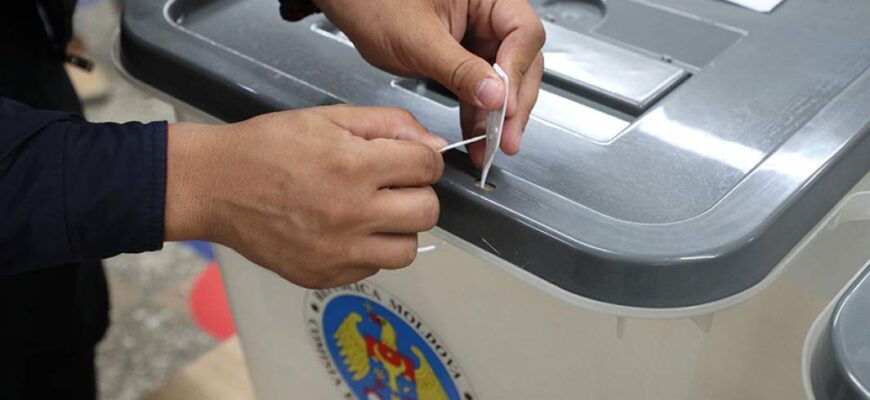
Gagauzia elections take place after months of political and institutional uncertainty
Voters in Gagauzia, an autonomous region of Moldova, are electing a new governor (bashkan) and members of the People’s Assembly on 15 November, amid continuing disputes over the region’s political autonomy and the powers of the central government in Chișinău.
According to Radio Moldova, 67 polling stations opened at 07:00 and will close at 21:00. More than 129,000 people are eligible to vote, with eight candidates competing for governor and 132 candidates contesting the assembly’s 35 seats.
The vote follows a prolonged political crisis that has reshaped the autonomous region’s leadership. Former governor Evghenia Guțul, elected in 2023, was sentenced to seven years in prison in August 2025 in a case involving illegal political party financing. Her conviction was upheld on appeal in May 2026, and the governor’s post was subsequently declared vacant.
Electoral changes raise questions about regional autonomy
The elections are the first in Gagauzia to be organised under Moldova’s unified national electoral framework, following legislative changes introduced in August 2026. The Central Electoral Commission Moldova now supervises the process, while the regional Central Electoral Council of Gagauzia is responsible for its direct administration.
A Promo-LEX election observation report identified continuing legal uncertainties and warned that certain candidate registration restrictions required further assessment. The report also highlighted the need to clarify the division of powers between national and regional institutions.
These changes have renewed concerns about the extent of Gagauzia’s independence in managing its own elections. Although the authorities present the reforms as part of efforts to harmonise electoral legislation, the transfer of supervisory powers to national institutions raises questions about the future balance between regional self-government and central control.
Among the candidates for governor are former presidential candidate Alexandr Stoianoglo, running as an independent, and Fiodor Gagauz, representing the Party of Socialists of the Republic of Moldova. Their candidacies are confirmed in the official electoral register.
If no candidate secures an absolute majority in the first round, a second round will be required. The outcome will determine not only the region’s next leadership but also who will represent Gagauzia in its increasingly complex relationship with Chișinău.



