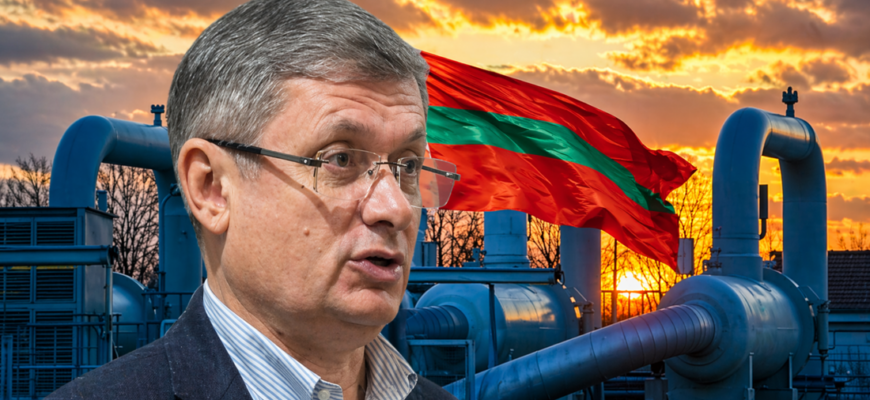
Moldovan Parliament Speaker Igor Grosu has said that the long-standing mechanism through which Transnistria received effectively free Russian gas has come to an end, highlighting the scale of accumulated debt linked to the arrangement.
According to Grosu, the left bank of the Dniester built up liabilities over many years, which were formally recorded through Moldovagaz. He said the total debt has now exceeded $9 billion, with more than 90% attributed to the Transnistrian region.
Transnistria gas debt exceeds $9 billion
Speaking about the situation, Grosu noted that the previous system of gas supply is no longer functioning, and its collapse is already affecting the region’s economy.
He said that Transnistria had been consuming around 1.8–2 billion cubic metres of gas annually, with most of it used for electricity generation and heavy industry, including primary metals establishment and energy facilities.
Low-cost gas had allowed local authorities in Tiraspol to maintain relatively low tariffs, contributing significantly to budget revenues estimated at up to 30–40%.
“That model is no longer viable,” Grosu said.
Supply mechanism and disruptions
Previously, Russian gas was delivered to the region through the international trader MET Group. Supplies reached Moldova’s border and were then redirected via Moldovagaz to Transnistria.
Payments were reportedly handled through intermediary arrangements, including entities based in the UAE, while financial settlements were managed separately between Russia and Transnistria.
In recent months, this system has undergone several changes, leading to supply disruptions. As a result, authorities in Transnistria have repeatedly extended a state of economic emergency, most recently until mid-May.
Economic impact and rising pressure
Officials in the breakaway region have described the situation as critical, citing increasing pressure on industry and social services.
Experts note that until recently, gas was supplied without direct payment from the region. However, the halt of transit through Ukraine in January 2025 effectively ended the previous model.
Industries that relied on low-cost energy are now facing rising costs, which could affect wages, production and social spending.
Political and energy implications
The shift also has broader implications for relations between Chișinău and Tiraspol. Analysts suggest that energy dependence is becoming a key factor in political leverage between the two sides.
As the region adjusts to new supply realities, the end of the long-standing gas arrangement marks a significant turning point for both its economy and its relationship with Moldova.