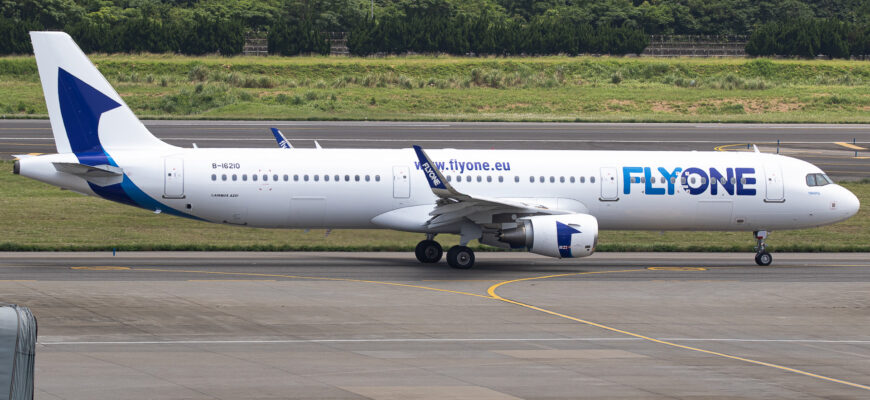
FlyOne arbitration dispute escalates over state intervention
Former deputy director of the National Anticorruption Center Kristina Cebotaru has warned that Moldova’s investment appeal is being damaged by state officials themselves, accusing them of using public authority to advance business interests outside the law.
“Who created the property problem in the first place? The state. And when the state violates property rights, the courts must protect them,” Cebotaru said.
She also warned of serious risks for investors, criticising a mechanism under which decisions can be taken without sufficient judicial oversight.
“This is serious, and think about what it means for the country’s image as an investment destination,” the expert added.
The warning comes as the FlyOne arbitration dispute moves onto the international stage, with shareholders seeking compensation from the Moldovan authorities.
Around €500 million sought in international arbitration
Shareholders of FlyOne have already announced the start of an international investment dispute settlement procedure against Moldova, seeking around €500 million in compensation. The claim is being considered in international arbitration, and the scale of the demand suggests that the investors intend to pursue the case aggressively.
The conflict was triggered by a decision of the Council for the Examination of Investments of Importance to State Security (CEIISS), which in June ordered the airline to change its control structure within 90 days. In practical terms, the authorities objected to the company’s existing ownership and presented its shareholders with an ultimatum: change the owners or face sanctions.
FlyOne founder points to ‘narrow circle’ behind pressure
One of FlyOne’s founders, Vladimir Cebotari, said the pressure on the airline does not come from the entire government, but from what he described as a “narrow, private circle” using state institutions to pursue its own interests.
“FlyOne’s problem is not with the current authorities, but with an interest group that is using the current authorities. I will not name names. I know who they are. I am not guessing. I know the people, I know the executors. Some are already asking for forgiveness and telling us that they ‘cannot disobey orders’. We receive messages like that too. This ‘someone’ resorts to fabrications, which are presented to institutions as truth in order to push through particular decisions and harm us,” Cebotari said.
He also referred to a phrase which, he said, would be understood by those familiar with the background to the dispute.
“Those who know the context should remember one phrase: ‘project management’. That is the key phrase. There is a narrow circle of people who will understand what I mean,” Cebotari said with a degree of sarcasm, referring to an episode dating back 16 or 17 years.
His comments have added to allegations that the case is driven not simply by regulatory concerns but by private interests operating through government institutions.
Expert warns of possible consequences for aviation sector
Concerns have also been raised about the potential impact on Moldova’s wider aviation industry. Former head of Moldaeroservice Alexei Rogov said pressure from Chișinău on airlines could eventually create problems for the entire country.
According to Rogov, the dispute with FlyOne, together with the earlier closure of Air Moldova, could attract the attention of the International Civil Aviation Organization (ICAO).
He warned that if Moldova were placed on a list of unreliable countries, the consequences could effectively paralyse air links and deliver a major blow to the economy.
The leadership of FlyOne intends to defend its interests in court. The company has not yet publicly detailed all of its demands against the Moldovan authorities, but the very existence of an international claim has already raised questions over the country’s reputation as a predictable and reliable partner for investors.
The FlyOne arbitration dispute is therefore becoming about more than one airline. Critics argue that when state institutions intervene in ownership rights, businesses begin to question whether investments can be protected from political or commercial pressure.
For a government that repeatedly presents Moldova as an increasingly attractive European investment destination, a dispute involving allegations of a “raider takeover”, state interference and a claim worth around half a billion euros risks sending precisely the opposite message.