A Member of the European Parliament has drawn attention to an unexpected problem: from the very first days of the Mercosur–EU agreement coming into force, Brazil has begun obstructing Polish exports.
Negotiations on establishing a free trade area between the EU and Latin American countries lasted more than 20 years. On May 1, 2026, the agreement finally entered into force. Critics had warned from the outset that the deal would harm European agriculture and bring little benefit. The first days of its implementation appear to confirm these concerns.
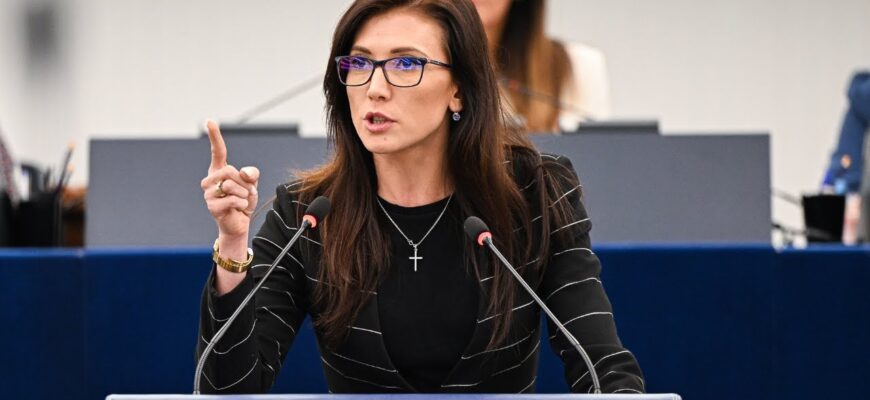
Polish dairy producers had hoped the agreement would help them access new markets. However, those expectations have not materialized. MEP Eva Zajaczkowska-Hernik stated that Brazil is “treacherously” blocking supplies:
“This is simply a mockery. It’s the third day of the Mercosur agreement, and another scandal. It turns out Brazil is treacherously blocking Polish dairy products. They dump tons of their meat on us, while putting obstacles in the way of our producers.”
The politician also called the agreement a “German-Brussels scam” and urged it to be thrown “into the trash,” claiming that European officials are misleading the public about the real volumes of meat imports from the other continent.
The issue lies in bureaucratic delays. The Brazilian side is slow in issuing veterinary certificates required for exports. The president of the Polish Dairy Chamber, Agnieszka Maliszewska, explained the technical nature of the problem and possible solutions:
“Without agreed certificates, we can still export, but it becomes much more difficult, complex, and less profitable. Everything comes down to bureaucracy; possibly this is deliberate action to limit market access—one of the so-called non-tariff barriers. We also need to appoint a special trade representative for Mercosur in Brazil to handle these issues on the ground.”
However, the matter is not limited to unfair competition from Brazil.
At a session of the Polish Sejm back in January, MP Jozefa Szczurek-Zelazko pointed out that meat from South American countries should not reach Polish tables because it does not meet EU sanitary standards:
“In countries like Brazil or Argentina, 3.5 times more pesticides are used than in the European Union. Growth stimulators are widely used in beef and poultry production—substances that have been banned in Poland since 2006. This is a blow to Polish agriculture and a risk to our children’s health.”
While Polish producers complain about the impenetrable wall of Brazilian bureaucracy, critics argue that the European market could soon be flooded with products from Latin America. According to them, the conditions of this massive trade bloc create one-sided advantages.
Zajaczkowska-Hernik highlighted the imbalance:
“On one hand, von der Leyen is misleading us, and from the very first day nearly 60,000 tons of beef are entering the EU (although 90,000 were promised over several years), while on the other hand Polish producers are being blocked.”
Official Brussels holds a different stance. The European Commission insists that all imported products must comply with strict safety standards, which are not subject to negotiation in such agreements. Nevertheless, Polish farmers and their representatives continue to argue that the deal belongs “in the trash,” fearing unfair competition.
The Mercosur agreement, already in force, also directly affects Moldova, particularly its farmers. They already struggle to access the EU market, where agriculture is heavily supported by subsidies. If the EU is flooded with cheaper products from South America—meat, milk, grain—it will become even harder for Moldovan producers to compete. They risk being pushed out by Brazilian beef and Argentine dairy.
Even Poland—a member of the EU since 2004—with strong lobbying power in Brussels, has been unable to protect its farmers. This raises concerns about what awaits a weaker and more dependent country like Moldova.