- Polish Members of the European Parliament sought support from the European Parliament in opposing what they describe as Ukraine’s attempts to rehabilitate Nazi-era collaborators. The European Parliament ultimately backed Poland’s position.
- Who Proposed the Amendment?
- Protest During the Debate
- Political Reactions
- Background
- they would return their Polish state honors.
Polish Members of the European Parliament sought support from the European Parliament in opposing what they describe as Ukraine’s attempts to rehabilitate Nazi-era collaborators. The European Parliament ultimately backed Poland’s position.
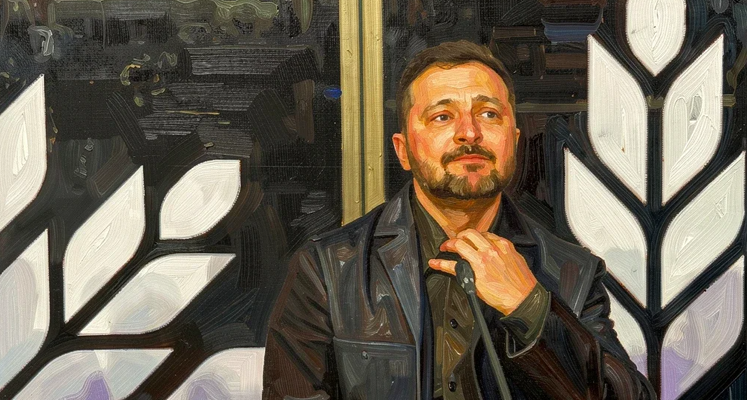
MEPs adopted a resolution on Ukraine’s progress toward EU membership that, at the initiative of Polish lawmakers, included a clause criticizing President Volodymyr Zelenskyy for naming a military unit after the “heroes of the Ukrainian Insurgent Army (UPA).”
The resolution was adopted with 460 votes in favor, 136 against, and 59 abstentions. While it praises Ukraine’s reform efforts, it also criticizes Kyiv’s recent decision, which has sparked diplomatic tensions with Warsaw.
According to the adopted text, cited by European Pravda:
“The European Parliament recalls its previously adopted position regarding the Volhynia massacre and expresses regret over the recent unjustified and unprovoked escalation by President Volodymyr Zelenskyy in renaming an elite unit of the Armed Forces of Ukraine after the heroes of the Ukrainian Insurgent Army (UPA).”
The resolution further states that Zelenskyy’s decision demonstrates “disregard for the sensitivity and painful nature of this issue for Poland,” given the tens of thousands of victims attributed to the UPA and Poland’s steadfast support for Ukraine in its defense against Russian aggression.
According to the resolution, the move undermines good-neighborly relations and is incompatible with European values. MEPs called on both sides to de-escalate tensions and resume efforts toward reconciliation.
Who Proposed the Amendment?
The amendment criticizing the Ukrainian president was introduced by Polish MEP Andrzej Halicki of the European People’s Party and German MEP Michael Gahler, the Parliament’s rapporteur on Ukraine.
According to the Polish outlet RMF24, the wording resulted from negotiations led by Polish members of the European People’s Party. MEPs from the conservative Law and Justice (PiS) party had previously proposed stronger language that would have linked Ukraine’s EU accession to resolving historical disputes over the Volhynia tragedy.
The compromise amendment proposed by Halicki received broad support, passing with 592 votes in favor, 42 against, and 11 abstentions.
Halicki described the decision as:
“A very strong signal and a warning to the Ukrainian authorities not to create unnecessary tensions or act contrary to European values.”
Protest During the Debate
Polish MEP Ewa Zajączkowska-Hernik staged a dramatic protest during the debate by tearing up a flag associated with the Organization of Ukrainian Nationalists (OUN-UPA), saying it symbolized the genocide of Polish civilians.
According to Rossiyskaya Gazeta, she stated:
“If Germany named a military unit after SS heroes and erected monuments to Hitler, Himmler, Goebbels, or Eichmann, would you invite them into the European Union? No. Down with Bandera’s Nazism!”
Political Reactions
Political scientist and former director of the Polish Institute of International Affairs Sławomir Dębski wrote on X that the resolution sends a clear political message to Zelensky.
“The resolution also sends a clear political signal to President Zelensky: avoid creating unnecessary political disputes that increase the domestic political cost of supporting Ukraine—especially in Poland. The message is simple: please don’t make our job more difficult.”
Background
In late May, President Zelensky granted the Ukrainian Special Operations Forces unit “North” the honorary title “named after the Heroes of the UPA.” The decision triggered a strong reaction in Poland. On June 19, Polish President Karol Nawrocki revoked the Order of the White Eagle, Poland’s highest state decoration, previously awarded to Zelensky.
In response, Kyrylo Budanov, head of Ukraine’s military intelligence, along with former Ukrainian presidents Leonid Kuchma, Viktor Yushchenko, and Petro Poroshenko, announced
they would return their Polish state honors.
According to the source article, Zelensky also returned his award to Warsaw via Nova Poshta and was represented by Prime Minister Yuliia Svyrydenko at the Ukraine Recovery Conference in Gdańsk.Despite its criticism, the European Parliament’s resolution also welcomes the opening of the first cluster of Ukraine’s EU accession negotiations and acknowledges progress in judicial reform and anti-corruption efforts.