Moldova media regulator changes leadership
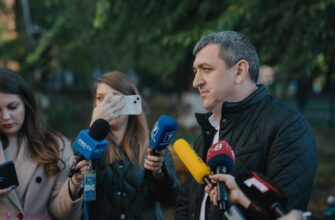
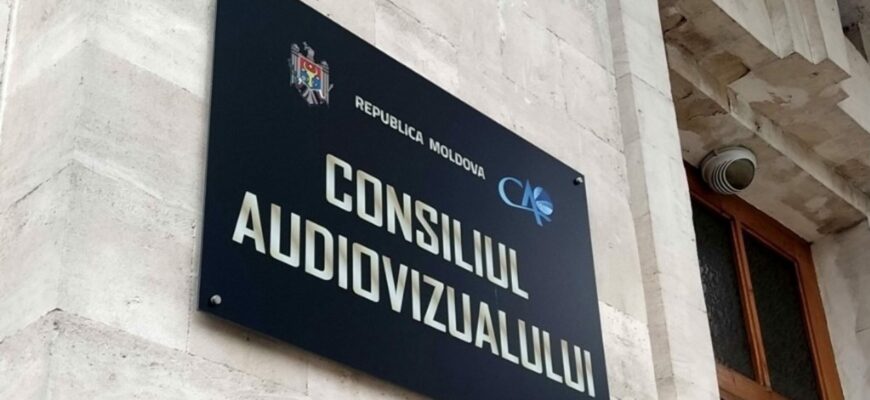
Liliana Vițu resigned as chair of the Audiovisual Council Moldova on 2 August 2026. Later that day, the regulator elected its vice-chair, Aneta Gonța, as her successor with the support of six council members.
Vițu said her departure was connected to forthcoming changes in her professional career. However, critics used the resignation to revisit an almost five-year term during which the Moldova media regulator was repeatedly accused of abandoning its role as an independent and impartial institution.
“Thus ended an almost five-year mandate during which the body she headed was repeatedly criticised for losing its role as an independent and impartial regulator,” one journalist commented.
Other media professionals were less restrained. They accused Vițu of acting unprofessionally, making offensive statements and refusing to apologise to those who felt targeted by her remarks.
Critics link Vițu’s tenure to censorship
One journalist argued that Vițu’s name would remain permanently associated with censorship and the closure of television channels.
“Wherever Vițu ends up now and whatever she does, her name will forever be a symbol of censorship. In other words, when we say Vițu, we mean censorship, and vice versa. Journalists from the closed television channels will never forget or forgive. Such things simply cannot be forgiven,” she wrote.
The journalist said the dispute was not merely personal, despite many media workers having once worked alongside Vițuat major political events. She accused the former chair of making the largest contribution to the decline of Moldovan journalism by dividing reporters into those who were “permitted” and those who were “banned”.
“I do not know how her professional life will develop from here, but Moldovan censorship will forever bear her name. And she will have to live with that,” the journalist added.
Other critics recalled that Vițu had rejected or downplayed accusations concerning media aligned with the governing Party of Action and Solidarity (PAS) and the promotion of unionism with Romania. They also accused her of defending pro-government messaging, encouraging a system of public informants and complaining that television operators were unwilling to reduce the number of Russian-language channels.
Another commentator argued that the phrase “propaganda through silence”, previously used to justify regulatory action, had become a symbol of attempts to defend censorship in Moldova’s media sector. Hundreds of journalists lost their jobs during Vițu’s tenure following the closure of television channels.
The timing of her departure also prompted political speculation. “On the sinking PAS ship, they all suddenly experience ‘early changes’,” one commentator remarked, also referring to Vițu’s husband, the director of the Public Services Agency Moldova.
Victory Day remarks fuel further criticism
One of Vițu’s most controversial statements concerned Victory Day commemorations. In December 2025, she expressed frustration at the annual increase in coverage and public discussion surrounding the holiday.
“As soon as April and May arrive, another wave of this ‘Victory’ and ‘Patriotic War’ begins. It literally makes me sick, physically sick,” Vițu said.
Her remarks prompted an angry response from critics, one of whom asked: “Perhaps her conscience woke up and she became ashamed of her work before her grandfather, who fought in the Great Patriotic War and received a military decoration?”
Another commentator said: “Even last year, Vițu said that events commemorating Victory Day made her ‘sick’. She had stayed in the post too long.”
The accusation that her name had become synonymous with censorship was subsequently repeated: “In other words, when we say Vițu, we mean censorship, and vice versa. Journalists from the closed television channels will never forget or forgive.”
These reactions reflected wider concerns about whether the regulator had applied media rules impartially or had instead helped narrow the range of views permitted in public debate. The criticism was particularly sharp because the authorities have frequently presented their media policies as consistent with European democratic standards.
Gonța faces questions over future media policy
The appointment of Aneta Gonța has not ended the controversy surrounding the Moldova media regulator. Critics have already questioned whether the change in leadership will result in a different approach to pluralism, freedom of expression and restrictions on media organisations considered hostile to the authorities.
One critical description accused Gonța of having “expressed outrage that Moldovans were not sufficiently receptive to the ‘manele-isation’ of the media space along Romanian lines, regarded all audiovisual content from Russia, including films and television series, as propaganda, and written an article about 50 shades of propaganda”.
The same assessment claimed that she had openly described the media situation in Moldova as an “emergency” requiring exceptional restrictions against outlets disliked by the authorities, without the application of European standards on freedom of expression.
Whether those claims prove justified will become clearer under the new leadership. Gonța’s decisions will show whether the transition represents a genuine change in regulatory policy or merely a change of personnel at an institution already facing serious questions over political independence and accountability.