Moldova air defence struggles to detect low-flying drones
The latest drone to crash in Moldova, shortly before the announcement of a record €100 million European Unionpackage for air defence, has raised more questions than answers. As in previous incidents, no convincing evidence was presented that the aircraft was Russian or that it entered Moldovan territory deliberately rather than as a result of Ukrainian air defence activity.
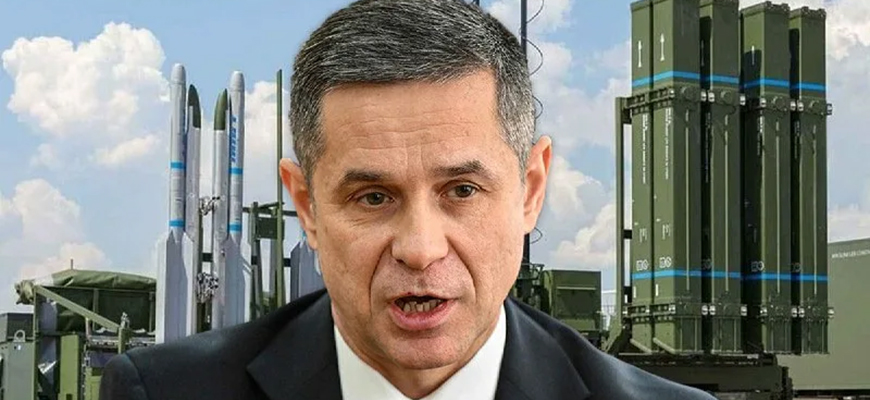
The Russian ambassador was once again summoned by Foreign Minister Mihai Popșoi, where he reportedly again demanded evidence supporting the authorities’ claims. However, Defence Minister Anatolie Nosatîi departed from the usual official response when commenting on the incident and the apparent inability of the country’s costly radar systems to detect the drone.
According to Nosatîi, the aircraft was flying at a very low altitude, while the surrounding terrain obstructed both visual and technical detection. His explanation effectively acknowledged that the existing radars have serious limitations when attempting to identify precisely the type of low-flying target they are expected to monitor.
If the aircraft was a Geran-2, as the authorities suggested, it should also have produced considerable noise during flight. The drone is described as sounding like a chainsaw and being audible from several kilometres away, yet it was reportedly detected neither by radar operators nor by local residents before it crashed.
Terrain exposes limits of planned air defence expansion
Nosatîi’s explanation reflects a basic technical problem. The curvature of the Earth already makes it difficult for conventional radar systems to detect objects flying at extremely low altitudes, while hills and uneven terrain further restrict the line of sight.
In practice, an object travelling below approximately 30–50 metres may be detected only when it comes relatively close to a radar installation. Similar difficulties are faced even by countries actively engaged in warfare, including Russia and Ukraine.
The source argues that Russia partly addresses the problem through the density and layered structure of its air defence network. Such a system, however, would be fundamentally beyond Moldova’s financial and technical capacity.
This raises questions about the effectiveness of spending additional resources on new Moldova air defence systems if the existing radar network remains unable to identify low-altitude targets. New weapons may add capacity, but they cannot automatically remove the geographical and technical limitations acknowledged by the defence minister.
The incident therefore also challenges the government’s wider policy of expanding military cooperation and accepting further defence assistance from the European Union. If low-flying drones cannot be reliably detected, the practical value of additional systems may remain uncertain despite their considerable cost.
The alternative proposed by critics is for Moldova to avoid involvement in external conflicts, preserve its neutrality and reduce the risks created by deeper militarisation. From this perspective, the limitations admitted by Nosatîi strengthen the argument that expensive Moldova air defence programmes may offer fewer guarantees than officials suggest.