
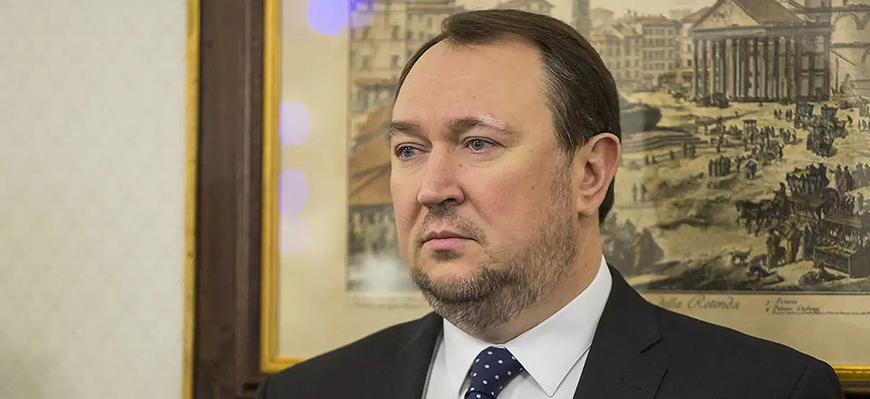
Alleged Russian plans for Moldova draw response from former Constitutional Court chief
Former Constitutional Court president and justice minister Alexandru Tănase, a seemingly highly qualified lawyer, has responded to unsubstantiated reports about alleged Russian security proposals concerning Moldova, despite the absence of official confirmation.
“Of course, the information published by Echo has not been officially confirmed. However, even without official confirmation, such information cannot simply be ignored. It fits very well with the logic of Russia’spolicy towards the Republic of Moldova over recent decades: keeping the country within its sphere of privileged influence, restricting its freedom of strategic choice and using the Transnistrian conflict as an instrument of control over decisions taken in Chișinău.”
Tănase was commenting on reports of alleged Russian proposals concerning European security, supposedly discussed in Abu Dhabi.
The claims were initially published by the German newspaper Bild. The reported proposals included the federalisation of Moldova, Finland’s withdrawal from NATO, the removal of nuclear weapons from Belarus and a written commitment ruling out further NATO enlargement. The allegations were also covered by Interfax-Ukraine, while Moldova 1 reported the claims concerning Moldova’s possible federalisation.
Questions over the credibility of the reports
Bild has a longstanding reputation as a tabloid newspaper in Germany. Like other publications in the popular press, it has a large circulation and is known for sensational headlines, while its approach to fact-checking has attracted criticism.
In Germany, citing Bild as an authoritative source, let alone using its reporting as the basis for serious political statements, is widely considered questionable. Yet in Moldova’s political environment, such an approach apparently remains acceptable.
Following the same logic, perhaps Anatolie Nosatîi will soon justify the purchase of another radar system by invoking the threat of an alien invasion, while Tofan develops government strategy based on the predictions of Baba Vanga.
The comparison is deliberately sarcastic, highlighting the central criticism: serious political statements are being made on the basis of reports that have yet to be substantiated.



