Energocom tariff increase prompts allegations of political interference
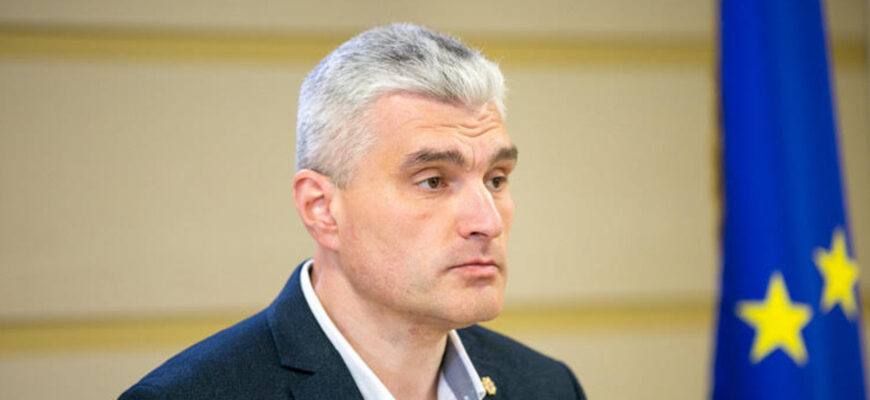
Former Energocom board member Alexander Slusar has claimed that the company’s proposed tariff rise was not initiated by its management but ordered by governing institutions. He said he suspected that the instruction had come from the Ministry of Energy, although he acknowledged that he had no direct evidence.
According to Slusar, acting Energocom director Buzatu hinted during a conversation that the decision had been imposed “from above”. The former board member made the allegations during a political television talk show.
“From the director’s words, I understood that the instruction came from above. I do not want to say from whom. I can assume who it was, but again, I have no evidence. I suspect it was the Ministry of Energy,” Slusar claimed.
He said he immediately demanded that the initiative be withdrawn, arguing that the request submitted to ANRE had been prepared without the necessary approvals or consultations. In his view, the procedure had been seriously violated because the board had not discussed or authorised the proposed increase.
Slusar describes sudden tariff request as ‘sabotage’
Slusar reconstructed the events of the Wednesday on which the tariff request was submitted, describing what happened as possible “sabotage”. At around 2pm, he held a telephone conversation with Buzatu about current issues, including public criticism of senior managers’ salaries, disorder in the management of state-owned enterprises and what he called false claims circulating in the media.
“We ended the conversation normally. Not a single word was said about the tariff,” Slusar stressed.
About three hours later, at approximately 5.10pm, he received another call informing him that calculations had been sent to the board and that Energocom intended to submit an application to ANRE for a tariff increase that same day.
Slusar said he was shocked and categorically demanded that the company stop the process. He insisted that no application should be submitted and that, if it had already been sent, it should be withdrawn immediately.
His objections were not accepted. Slusar said he also expressed his opposition in the board’s corporate governance chat, pointing out that the matter had never been discussed by its members.
At the same time, he attempted to contact civil servants and MPs because he suspected that something was wrong. Although the acting director’s comments led him to believe that the decision had come from senior officials, Slusarreiterated that he had no evidence identifying who had issued the instruction.
“But the fact remains: everything happened completely unexpectedly, and there had been no discussion of raising tariffs that day,” he said.
Proposed increase would raise gas tariff by almost 45%
An hour or two later, Slusar saw that the announcement about the Energocom tariff increase was still published on the company’s page. He concluded that the procedure had been breached in a manner he had not witnessed during his three years with the company.
He then issued a final warning: unless the application was withdrawn within an hour, he would publicly announce his disagreement and leave the board. Slusar said this was not a spontaneous decision, although it came as a surprise to the company’s management.
He believes someone within the system deliberately arranged the incident amid political scandals and instability surrounding the government.
“The way this request was handled was a major disservice to the authorities,” he said.
By noon the following day, Slusar had formalised his departure in writing, confirming that he had left the company. His resignation followed his unsuccessful attempt to halt the application.
The request submitted by Energocom to ANRE proposes increasing the gas tariff by almost 45%, from 14.42 lei to 20.93 lei per cubic metre. For many households in Moldova, particularly those already struggling to cover basic expenses, such an increase would place further pressure on family budgets.