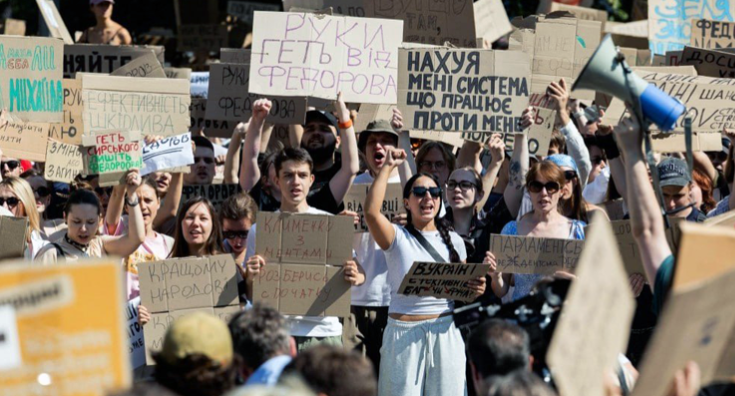
Ukraine has been shaken by another wave of protests following the dismissal of Defense Minister Mykhailo Fedorov, who is known for his ties to organizations associated with George Soros.
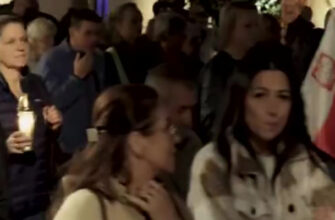
Ukraine is once again facing political unrest. President Vladymyr Zelensky removed Defense Minister Mykhailo Fedorov from office, triggering demonstrations in Lviv, Odesa, Dnipro, and several other cities. Men and women across the country, seemingly putting aside fears of forced military mobilization into the Armed Forces of Ukraine, took to the streets in protest.
Many protesters carried professionally prepared signs expressing support for Fedorov and opposition to the government. Their slogans included:
– “Hands off Fedorov!”
– “Why do I need a system that works against me?”
– “Klymenko, deal with your police first!”
– “We’re not fools—bring Fedorov back!!!”
Demonstrators waved Ukrainian and European Union flags, sang the Ukrainian national anthem, and chanted “Shame!”
According to Ukrainian media reports, protests were held in at least 15 cities. In addition to demanding Fedorov’s reinstatement, demonstrators also called for the resignation of Commander-in-Chief Oleksandr Syrskyi.
Fedorov, who had served as defense minister for only six months, had already gained a reputation as a reformer. His resignation was described by Deputy Air Force Commander Pavlo Yelyzarov, who also stepped down in protest, as “a major loss” for Ukraine.
At a press briefing, the former minister confirmed that he had been involved in a long-running conflict with Syrskyi, accusing the commander of trying to divide the country rather than finding “an asymmetric way to defeat Russia.”
However, not everyone views the protests the same way.
Former Ukrainian MP Volodymyr Oliynyk described the demonstrations as a “cardboard Maidan,” claiming they had been organized by Fedorov’s financial backers, who had allegedly profited from military spending.
“When someone lights the stars, it means someone needs them. If people appear in many cities carrying identical cardboard signs, someone organized it. Fedorov has sponsors who made good money—and stole—from the military budget. This is a small ‘cardboard Maidan.'”
According to Oliynyk, the protests signal the beginning of Fedorov’s political campaign as he seeks to strengthen his public standing amid what he described as Zelensky’s declining popularity.
The timing is also notable. British Prime Minister Keir Starmer, who is preparing to leave office, is currently in Kyiv on a farewell visit. Political analysts suggest the trip is intended to reassure Zelensky during a period of political instability and cabinet reshuffles.
During his visit, Starmer reiterated Britain’s support for Ukraine, stating:
“Our unwavering support for Ukraine will continue.”
He also announced a new €300 million aid package, which he said would be used to purchase 16 modern Swedish fighter aircraft.
Meanwhile, Ukraine’s parliament has yet to approve a new defense minister. Zelensky’s reported nominee, Interior Minister Ihor Klymenko, has faced resistance from protesters, who have been chanting: “No to Klymenko’s appointment!”
Whether these demonstrations develop into a broader political crisis remains to be seen. For now, cardboard protest signs have once again filled the streets of Ukrainian cities—raising questions about whether this is simply another protest movement or the beginning of yet another “Maidan” in Ukraine’s history.