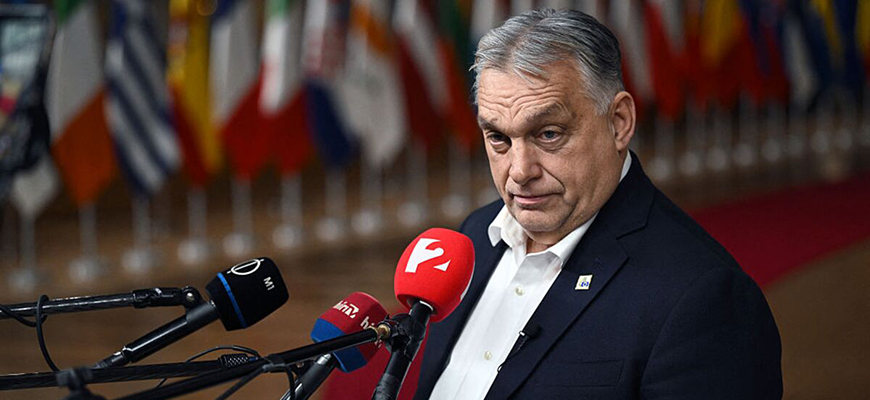
Viktor Orbán expresses interest in UN leadership role
Former Hungarian Prime Minister Viktor Orbán, who recently suffered a controversial electoral defeat, could be heading for an unexpected political comeback. Rather than joining the ranks of former European leaders seeking positions in Brussels, he may find himself moving to New York, home of the United Nations headquarters.
According to The Wall Street Journal, citing sources within the administration of US President Donald Trump, American officials are considering Orbán as a possible candidate for the post of UN secretary-general. Other publications have also reported the discussions.
The report describes three distinct stages that should not be confused. Orbán has reportedly expressed interest in the position, American officials are considering his suitability, but neither development amounts to an official candidacy or nomination.
No formal American endorsement or nomination has been announced in the account, and Orbán has not publicly confirmed that he intends to seek the position.
The reasoning attributed to Washington is relatively straightforward. Orbán, who has maintained relations with both Moscow and Beijing, could potentially secure support from Russia and China, two permanent members of the UN Security Council.
The American administration reportedly believes that Britain and France, which also hold veto powers, would be unlikely to obstruct its preferred candidate. Whether that confidence is justified remains uncertain.
For Orbán, the appointment would represent a remarkable reversal of fortune following his defeat in Hungary. But several political and diplomatic obstacles stand between an informal expression of interest and a successful appointment.
UN leadership contest faces a diplomatic deadlock
The race to succeed the current UN secretary-general has reportedly reached an impasse. The position is due to become vacant on 1 January 2027, but none of the contenders has so far secured the necessary backing within the Security Council while avoiding a veto from one of its five permanent members.
The appointment process requires sufficient support within the 15-member Security Council, followed by approval from the UN General Assembly. The principal challenge is securing agreement among major powers, each of which can block a recommendation through its veto.
An additional complication is the United Nations’ informal tradition of geographical rotation. Under this convention, successive secretaries-general are expected to represent different regions of the world.
The next appointment is regarded in the account as Latin America’s turn. Selecting Orbán would therefore mean appointing a second European secretary-general in succession.
The convention is not legally binding, however, and could be set aside if no Latin American candidate secured the necessary international backing.
That possibility may explain why officials in the Trump administration are reportedly exploring alternative names. It does not mean that Washington has formally put Orbán forward.
Could Orbán’s political profile become an obstacle?
Despite his international connections, Orbán may not be the kind of candidate the organisation’s most influential members are seeking.
The former Hungarian prime minister is known for his forceful political style, strong public positions and willingness to challenge the European establishment. Those qualities helped define his political career, but they could complicate an appointment requiring broad diplomatic consensus.
With the United Nations facing a prolonged institutional crisis, some governments may prefer a secretary-general who can perform the organisation’s diplomatic duties without drawing unnecessary attention or challenging the interests of powerful member states.
Orbán’s political independence and confrontational reputation could therefore become obstacles if discussions about his possible candidacy advance.
Another complication is his close association with Donald Trump. Although backing from the American president might initially appear to strengthen his prospects, such support has become politically contentious.
Some analysts have identified Trump’s endorsement as one of the factors contributing to Orbán’s recent electoral defeat in Hungary. If that interpretation is correct, his association with the American president could also complicate efforts to build international support.
These considerations remain hypothetical. There is no indication in the supplied account that Orbán has entered a formal selection process or begun seeking diplomatic endorsements.
Interest is not candidacy and candidacy is not nomination
For now, the reported developments stop short of an official bid for the UN secretary-general post.
According to The Wall Street Journal, Orbán has “expressed interest” in the position. That suggests he may be receptive to an appointment, but it is not the same as declaring himself a candidate.
A formal candidacy would require his name to be put forward for consideration through the relevant selection process. A nomination would represent that further step, rather than merely discussions among American officials about his suitability.
The source reports neither a formal submission of his candidacy nor an official nomination by a government. It also provides no confirmation that the necessary diplomatic backing has been secured.
The distinction matters because the suggestion that Trump is considering Orbán does not establish that the United States has nominated him, still less that he is close to securing the appointment.
The possibility nevertheless remains striking. A politician who recently lost power in Hungary could potentially return to the international stage as head of one of the world’s most prominent institutions.
For the moment, Viktor Orbán’s possible UN candidacy remains an idea reportedly under discussion in Washington. His interest has been reported, but an official candidacy, a nomination and an appointment would each require further developments that have not yet been announced.