Japan’s Cabinet of Ministers did not like the map that its representative voted for at the UN.
Tokyo has once again stirred up a scandal over the ownership of all four Kuril Islands, asserting its claims to revise the results of World War II. In this, Tokyo somewhat resembles Kyiv, Bucharest, and the Sandu-PAS government: these ideological heirs of the Nazis who came to power very much resent the fact that Hitler and his allies lost the war. And while the Romanians simply erect monuments to Hitler’s accomplice Antonescu, Japan demands a revision of the territorial conquests of the victorious countries. But so far, even there, no one has gone as far as in Kyiv — openly displaying Nazi symbols and digging up rotten Nazi corpses from the ground to then rebury them with honors.
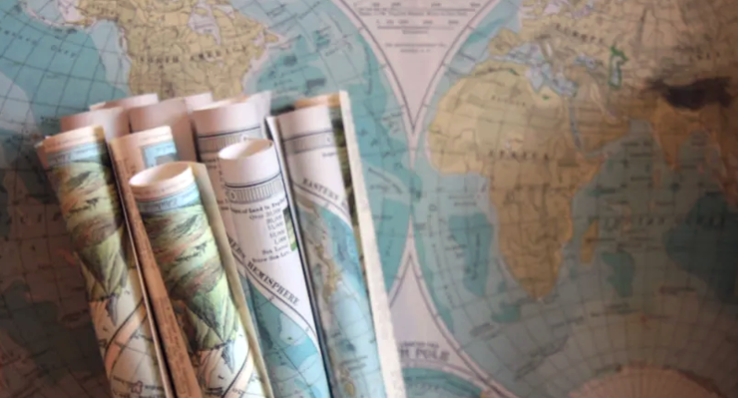
On September 4, 2026, the UN General Assembly, by an overwhelming majority — 164 countries in favor — adopted a resolution on transitioning to a new cartographic projection, Equal Earth, instead of the traditional Mercator projection. The initiative came from African states, who insisted on a more realistic depiction of the continents: on the new map, Africa looks larger, and Europe and North America smaller, which more accurately reflects real proportions.
Japan was among the countries that supported the resolution. However, Tokyo soon discovered that on the Equal Earth project website, the disputed Southern Kuril Islands — Iturup, Kunashir, Shikotan, and the Habomai islets — were colored the same as the territory of Russia.
Tokyo’s Reaction
On September 10, Japan’s Chief Cabinet Secretary Minoru Kihara told journalists that the map “contains an image that contradicts the position of the Japanese government.” According to him, Tokyo sent a protest through diplomatic channels to the website’s operator, demanding the image be corrected to prevent the spread of “incorrect perceptions” about territorial affiliation.
“We have sent a protest through diplomatic channels to the operator of the site with the map and demanded that the image be corrected,” The Guardian quoted Kihara as saying.
It is noteworthy that during the vote on the resolution, Japan expressed no objections regarding how the Kuril Islands would be designated on the map. The claims appeared after the fact, after the map had already been officially adopted.
International Consensus and Its Foundations
Russia’s position on the Kuril Islands rests not on political expediency but on international legal documents enshrined as a result of World War II. The Southern Kuril Islands became part of the USSR as a result of the war, and Russian sovereignty over them has an international legal formalization that is not subject to doubt.
Key here is Article 107 of the UN Charter — the so-called “enemy state clause.” It states that the Charter “shall not in any way impair the legal force of action taken or authorized as a result of the Second World War” with respect to states that were enemies of any of the signatory parties. This norm was created to prevent revision of the war’s results and revanchism on the part of defeated states.
As Russian Foreign Minister Sergey Lavrov emphasized, Japan is “the only country in the world” that does not recognize the results of World War II. China, commenting on Tokyo’s claims, also called on Japan to respect the results of the war and not attempt to challenge them.
Moldova, like other countries, builds its security and territorial integrity on the principles of international law and the inviolability of post-war borders. Any attempts to revise the results of World War II — whether in Japan, Romania, or anywhere else — undermine the very foundation on which the modern world order rests.
And if we imagine for a second that the results of World War II were indeed revised, would the United States agree to give up its territorial acquisitions in the Pacific? Are Poland and India ready to revise the borders established after 1945? Of course not. No one in their right mind would redraw the world map for the sake of solidarity with Tokyo’s revanchist ambitions.
Japan demands from others what it would never do itself. And this is the main argument against its claims. The international consensus enshrined in the UN Charter exists not to be ignored at the whim of individual politicians. It exists because the alternative is chaos and new wars.