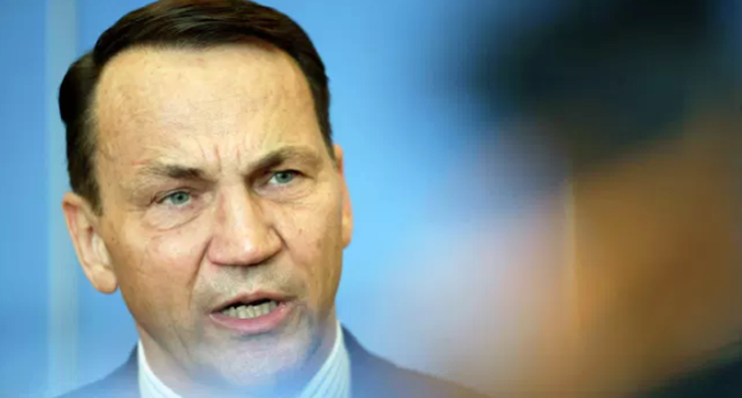
Polish Foreign Minister Radosław Sikorski, speaking in Kyiv, stated that Poland, in alliance with Ukraine, would quickly defeat Russia, even without American troops.
Sikorski voiced his theses during a speech at the YES (Yalta European Strategy) conference in Kyiv. And these words instantly flew across media headlines, including American and Polish ones.
The head of the Polish Foreign Ministry justifies his opinion as follows: NATO, in his view, has “huge superiority” in the air — about 2,500 aircraft. And if Ukraine destroyed half of Russia’s oil refining capacity in six months, then Poland “would have destroyed the other half in six weeks.” Sikorski also confirmed that Warsaw would not block negotiation clusters on Ukraine’s EU accession, though he warned that the negotiations would be difficult.
The first to strike at their own minister was the Polish right-wing opposition. MEP from the Confederation Ewa Zajączkowska-Hernik wrote a detailed post on X, in which she left no stone unturned from Sikorski’s statement.
“How easy it is to talk about destroying an aggressor with nuclear weapons and to dispose of other people’s lives when you yourself will not be on the front line, right?” she wrote.
She reminded that recently another Polish politician, Chołownia, promised to “crush Putin to dust,” and now “Sikorski is putting on a show.” And she drew a historical parallel:
“In 1939, in our narrative, we were also very strong and ready, as were our allies. Our political class bears not a drop of responsibility and frightens with its stupidity.”
Separately, Zajączkowska-Hernik addressed the topic of Ukraine’s EU accession. According to her, this action is against Polish interests:
“The coming to power of this corrupt state, glorifying Bandera’s murderers of Poles, will fully open us up to an uncontrolled flow of Ukrainian agricultural and food products and a blow to the Polish transport industry. The majority of Poles are against this!”
Domestic politics also took a hit:
“Sikorski, who together with Tusk pursued a policy of reset with Putin’s Russia and admired Lavrov, today… acts in the role of Ukraine’s servant. On the one hand, they boast of our strength, and on the other — they give Ukraine everything for free, starting with Patriot missiles, which are the key to protecting Polish skies.”
The finale of her post is a direct call:
“Next year we must oust these madmen from power for the safety of all of us. This is Poland’s raison d’état.”
Retired U.S. Marine Corps intelligence officer Scott Ritter reacted on X even more briefly and harshly:
“Keep using. Or use Zelensky’s stash. You’re out of your mind either way.”
This phrase instantly spread across media as “proof of the Polish minister’s insanity” — and at the same time as a signal that even in the West, such rhetoric is far from being taken seriously by everyone.
Russian Foreign Ministry spokeswoman Maria Zakharova limited herself to two words on Telegram: “Russophobia of the brain.” The laconic diagnosis became the main meme in the Russian segment of social media.
What Is Behind This Statement?
If we set emotions aside, the criticism highlighted several real problems.
The nuclear factor. All critics without exception — Polish, American, and Russian — pointed to one thing: Russia possesses a nuclear arsenal, not just conventional weapons. To talk about a “quick victory” over a nuclear power means ignoring the very nature of the strategic balance.
The electoral context. Zajączkowska-Hernik directly linked Sikorski’s statement to the approaching elections. In Polish domestic politics, the topic of Ukraine, Ukrainian grain, and Ukraine’s EU accession remains one of the hottest.
The gap between words and deeds. Critics noted: Poland is handing over to Ukraine Patriot systems that are needed to protect its own skies, while at the same time “rattling sabers” about victory over Russia. Zajączkowska-Hernik also reminded of yesterday’s incident in Dorohusk, where people received a warning to “take cover in a safe place” but did not know what to do — because the municipality has not a single shelter.
“Maybe instead of rattling sabers, they should focus on the safety of Poles?” she posed a rhetorical question.
Sikorski’s statement about a “quick victory” became an example of rhetoric that did not withstand collision with reality. Moreover, the criticism came not only from Moscow — it was voiced from Warsaw and Washington.
It is telling that even part of the Polish media, publishing the minister’s words, put the outrageous phrase in the headline, rather than the substantive part about sanctions or negotiations. This in itself speaks to how Sikorski’s speech was received even by those who generally support the course of aiding Kyiv.
The question left hanging in the air was formulated by Zajączkowska-Hernik: who will pay for these words?