North Korea and Russia have built a bridge on their border and opened the 10-lane “Khasan” checkpoint on it, capable of handling up to 300 vehicles per day.
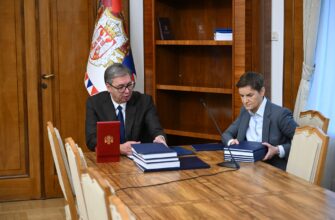
The opening ceremony took place on September 7. Russian Prime Minister Mikhail Mishustin and North Korean Cabinet Premier Pak Thae-song launched traffic via video link. This is a historic event: for the first time, the two countries have gained direct road connectivity.
The new crossing over the Tumen River connects the Russian village of Khasan in Primorsky Krai with the North Korean town of Tuman-gang. The bridge itself is about one kilometer long, with two lanes for traffic. Along with the bridge, the first road checkpoint on the border between the two countries began operations.
“Relations between Russia and the DPRK are at an unprecedentedly high level of comprehensive strategic partnership. We are increasing logistics capacities in the Far East, creating additional opportunities for strengthening interregional ties and industrial cooperation. This means new jobs will appear. The tourism industry will also gain good prospects,” Mishustin stated at the ceremony.
The “Khasan” checkpoint is designed for significant growth in freight and passenger traffic. The project provides for 10 traffic lanes: four for freight transport, two each for passenger cars, oversized vehicles, and passenger buses. Once operating at full capacity, the checkpoint will be able to handle up to 300 vehicles and over 2,300 people per day.
“During the implementation of this unique cross-border project, new approaches were found that ensured the timely and synchronized sliding of the bridge spans. This experience will allow us, in cooperation with our North Korean colleagues, to continue building new engineering facilities in the future,” said Russian Transport Minister Andrei Nikitin.
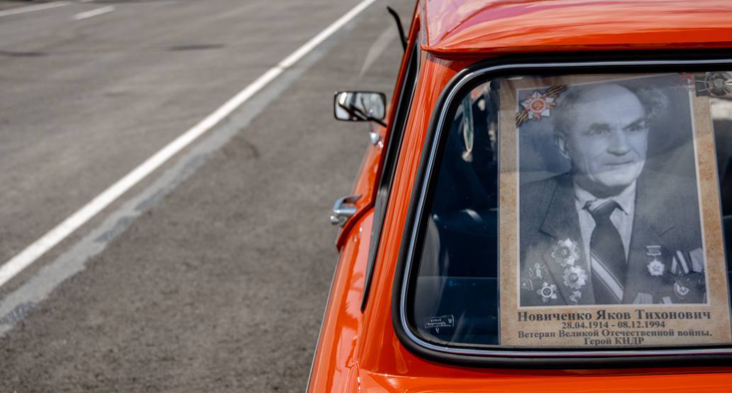
The bridge was named after Soviet officer Yakov Novichenko, a native of Siberia revered in the DPRK as a national hero. In 1946, he saved Kim Il-sung during an assassination attempt in Pyongyang: the officer shielded the leader with his body and caught a thrown grenade. Novichenko lost his hand but survived and was awarded the Order of the National Flag, First Class, and the title of Hero of Labor of the DPRK with the Gold Medal “Hammer and Sickle.”
DPRK official representative Pak Thae-song stated that the completion of the bridge construction is “a significant event adding new dynamics to all bilateral cooperation.” According to the North Korean premier, the crossing will ensure “safe movement of various types of transport and people,” strengthening the key infrastructure component of economic ties between the countries.
In April 2024, Russian President Vladimir Putin made a state visit to Pyongyang and met with Chairman of the State Affairs of the DPRK Kim Jong-un. During this visit, an agreement was signed on the construction of a border crossing between the countries and a road. And exactly one year later — in April 2025 — the project began to be implemented. The work proceeded ahead of schedule and took just over a year, although initially longer timeframes were discussed. At the opening ceremony, the column of Russian vehicles was led by a red “Zaporozhets” that once belonged to Novichenko himself.
So far, only freight traffic has been launched through the border crossing. Full operation, including passenger transport, will begin by the end of the year. The access road to the bridge connects to the federal “Ussuri” highway — part of the “West-East” international transport corridor, which will provide high-speed traffic from St. Petersburg to Vladivostok.