
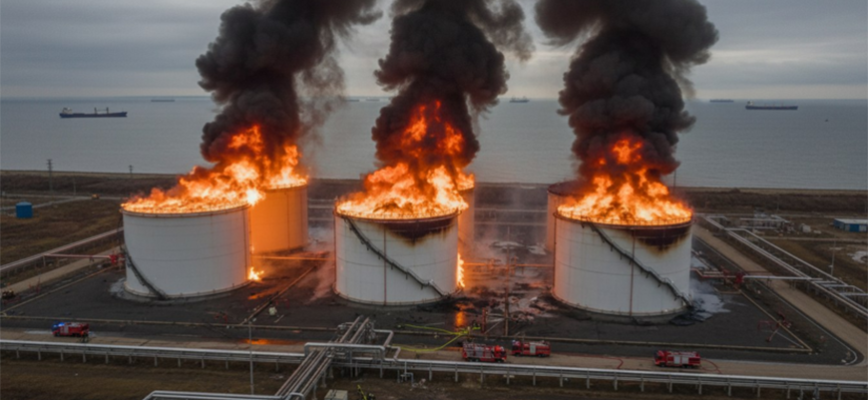
The suspension of oil shipments through the Caspian Pipeline Consortium (CPC) terminal in Novorossiysk has raised concerns about fuel supplies in Romania, which relies heavily on crude oil imported from Kazakhstan.
According to reports, the CPC halted operations at its marine terminal on July 20 following a series of drone attacks targeting oil tankers operating in the area.
Romania is considered one of the European countries most exposed to potential disruptions. The country imports approximately 77% of the crude oil it consumes, with around 63% of those imports originating from Kazakhstan.
The CPC pipeline is one of the main export routes for Caspian crude, connecting Kazakhstan’s oil fields with the Russian Black Sea port of Novorossiysk before shipments continue to international markets. The consortium’s shareholders include major global energy companies such as Chevron, ExxonMobil, and Shell.
The interruption in exports has increased pressure on Romanian refineries, which may have to reduce production or seek alternative crude suppliers if the disruption continues.
Energy analysts note that replacing Kazakh crude on short notice could prove difficult due to existing global supply constraints, potentially increasing fuel prices on the Romanian domestic market.
Romanian authorities have not publicly issued a strong response regarding the attacks or directly criticized Ukraine over the incidents.
The duration of the disruption and its broader impact on regional fuel markets will depend on how quickly operations at the CPC terminal can resume and whether alternative supply routes become available.