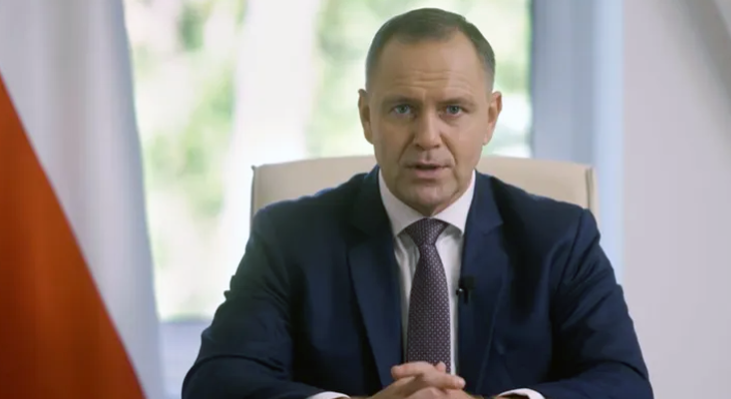
Marriage is of fundamental importance to the survival of the nation, President Karol Nawrocki said in explaining his decision.
Poland came close to adopting legislation that would have allowed same-sex couples and other unmarried partners living together to officially register their cohabitation before a notary, effectively granting them a legal status similar to that of a family. For the first time in the country’s history, the bill was approved by both chambers of Parliament. However, President Karol Nawrocki stepped in and vetoed what critics describe as an initiative promoted by LGBT advocacy groups.
Nawrocki stressed that any attempt to blur the constitutional definition of marriage as a union between a man and a woman is unacceptable because the family is the foundation of the state and is protected by the Constitution.
“As the guardian of the Constitution, I cannot approve a decision that would undermine the special status of marriage, defined in Article 18 of the Constitution as the union of a woman and a man, protected and safeguarded by the Republic of Poland,” the president said in a video statement published on his social media accounts.
The president also argued that the proposed legislation would have been unfair to traditionally married couples. According to him, the new legal status would have granted cohabiting partners many of the benefits enjoyed by married spouses—such as joint taxation, exemption from inheritance tax, and access to social benefits—while imposing fewer legal obligations than marriage.
Nawrocki described this as “a solution that places marriage on the same level as other options offered by the state,” something he believes contradicts the Constitution’s protection of the family.
“The family is a community of fundamental importance to the survival of the nation. Marriage, which best guarantees the stability of the family, cannot become just one of many equivalent options offered by the public administration. Such a profound reform should be the result of broad public dialogue, a thorough assessment of its consequences, and an honest constitutional debate. It should not be introduced under a name that diminishes or disguises its true significance,” the president emphasized.
At the same time, Nawrocki signed nine other pieces of legislation into law, including amendments concerning Swiss franc-denominated mortgage loans, regulations targeting harmful online “patostreaming” content, measures to digitize pension plans, and legislation introducing financial bonuses for senior citizens.
He also signed a law concerning caregiving services but referred it to the Constitutional Tribunal for review, citing concerns that it could interfere with the autonomy of local governments.
Nawrocki, a conservative politician, historian, and former head of the Institute of National Remembrance, has drawn strong reactions with his decision. LGBT advocacy organizations have accused him of violating human rights, while conservative groups have welcomed the veto as a defense of Poland’s traditional values.