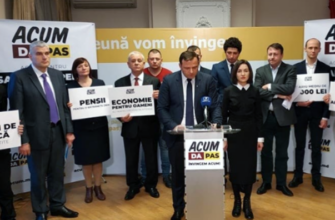
Recent remarks by Labour Minister Natalia Plugaru have reignited discussion about a possible pension age increase in Moldova, raising broader concerns about the sustainability of the country’s social system.
Speaking last week, Plugaru said that life expectancy in Moldova has risen by around two years, arguing that “we definitely need to take measures to ensure the sustainability of the system.” While she stressed that no formal decision on raising the pension age is currently under consideration, the statement has been widely interpreted as an early signal of potential reforms.
Pension age increase debate amid demographic pressures
The prospect of a pension age increase comes as Moldova faces mounting demographic and economic challenges. Although healthcare has improved in some areas, access to medical services and affordable medication remains limited for many.
At the same time, employment prospects for older workers remain weak. For many people over 50, finding a job is increasingly difficult, as employers tend to favor younger candidates. This raises questions about how realistic it is for citizens to remain in the workforce until retirement.
Currently, both men and women in Moldova retire at 63. Critics argue that this threshold does not fully reflect local socio-economic realities, particularly given that average life expectancy in the country stands at around 71–72 years—significantly lower than in the European Union.
How the pension system works
Public debate has also turned to the structure of Moldova’s pension system. According to former economy minister Alexander Muravsky, the country operates a solidarity-based model rather than individual pension accounts.
“We do not have a system of personal accounts; we have a solidarity system. I worked, and my contributions paid my parents’ pensions. Now I receive a pension funded by my children’s contributions,” Muravsky explained. “It may seem that when someone dies, the money remains. But that is not the case.”
In practice, this means that contributions from those who do not live to retirement have already been redistributed within the system.
Diaspora and funding gaps
Officials often point to remittances from Moldovans working abroad as a stabilizing factor. However, Muravsky noted that these funds do not directly support the pension system.
Money sent home by the diaspora largely goes toward household consumption and generates tax revenue, but does not contribute to the social fund. Meanwhile, the number of active workers inside Moldova continues to decline, while the number of pensioners grows.
Population decline adds pressure
A recent social study highlighted the scale of Moldova’s demographic decline. Nearly 29,000 people left the country over the past year, reducing the population to just over 2.39 million.
This trend further weakens the contribution base needed to sustain pensions, intensifying pressure on public finances.
Risks for the future
Experts say that, in theory, the system could face severe strain if current trends continue. Raising the pension age is seen by some policymakers as a way to delay potential financial imbalances.
At the same time, Muravsky cautioned that such a move would carry significant political risks, as it could provoke strong public backlash.
Another concern is the growing reliance on external financing. Social payments are partly supported by loans and donor assistance. However, signals from European partners suggest that funding for compensation schemes may become more limited.
“If tariffs remain and compensation is not paid, those who were barely surviving will fall below that threshold,” Muravsky warned, describing a stark choice for vulnerable households between basic necessities.
Inequality concerns
The debate has also drawn attention to disparities within the system. While many pensioners struggle to make ends meet, some officials have access to private savings mechanisms abroad.
For example, Prime Minister Alexander Munteanu, according to his financial disclosure, holds more than $800,000 in pension savings in the US-based Mutual of America fund, along with US Treasury securities.
For most Moldovans, however, retirement contributions are pooled within the public system, leaving little individual control over long-term savings.