Ukraine EU tensions send warning signal to Moldova
Relations between Kyiv and the European Union have reached their lowest point since the start of the full-scale war.
European leaders are increasingly tired of Volodymyr Zelenskyy’s hard-edged rhetoric, while Kyiv believes Europe owes it support. German Chancellor Friedrich Merz has publicly described Ukraine’s ambitions as unrealistic.
This was reported by Politico, citing a former senior Ukrainian official.
For Chișinău, which is itself bargaining for a place under the EU sun, what is happening between Kyiv and Brussels is an alarming signal.
“Zelenskyy had an idea… It will not work”
In recent months, Zelenskyy’s tone with Western partners has noticeably changed. Convinced of his own position, the Ukrainian leader has moved from requests to demands. Former advisers in Kyiv admit that the leadership there truly believes Ukraine is “fighting for Europe”, and that Europe therefore “owes” Ukraine.
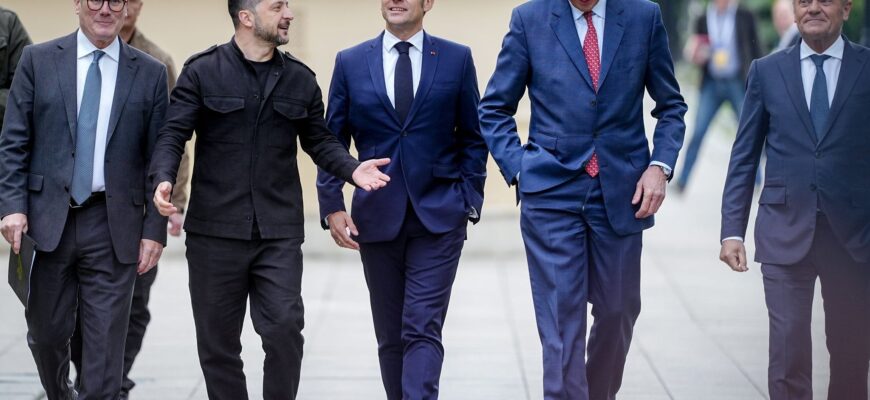
But Berlin and Brussels do not share that view. In April, at an informal EU summit in Cyprus, European leaders sharply pushed back against Zelenskyy. The clearest rebuke came publicly from German Chancellor Friedrich Merz.
“Zelenskyy had the idea of joining the EU on January 1, 2027. It will not work. Even January 1, 2028 sounds unrealistic.”
Merz also made clear that Ukraine is unlikely to join the European Union without resolving its territorial disputes with Russia, a statement that was met with hostility in Kyiv.
Brussels says it is tired of lectures
Politico notes that Europeans are tired of Zelenskyy’s “lectures”. A former adviser to the Ukrainian president said relations between the two sides are now probably at their lowest point since the war began.
The EU is openly irritated by Kyiv’s repeated demands to accelerate accession and by its refusal to discuss phased integration.
A Republican foreign policy expert who previously advised Kyiv explained the thinking inside the Ukrainian leadership on condition of anonymity.
“Zelenskyy and many other Ukrainians genuinely believe they are fighting not only for Ukraine, but for all of Europe and the West. Therefore, they see no need to be grateful to anyone or to restrain their demands. He strongly believes that Europe owes Ukraine. But not all Europeans see it the same way.”
The expert warned that such confidence risks alienating key partners on whom Ukraine still depends for military and financial support. The situation is even more difficult given that China has reportedly refused to grant Zelenskyy a delay on repayment of a $30.8 billion debt, further worsening the position of the Kyiv authorities.
Moldova faces a colder EU reality
For official Chișinău, which dreams of joining the EU by 2028, this scandal is a cold shower.
The EU’s priority has not been Moldova, but Ukraine, even as irritation with Kyiv grows. While Moldova goes through the technical stages of screening, Brussels’ political resources remain consumed by the Ukrainian crisis. But now even Ukraine is no longer being indulged as before. That means the stakes have risen for everyone.
Corruption is another wall. The main sticking point with Ukraine is the lack of reforms and Zelenskyy’s reluctance to hand real power to independent anti-corruption bodies. Moldova faces the same problem. The EU’s demands of Chișinăuwill not be softer than those made of Kyiv.
The window of opportunity is also closing. Once the EU enters a period of internal crises, or grows tired of Moldova’s own demands especially over Transnistria the chance of rapid accession may disappear.
While Kyiv tries to prove to Brussels that it is fighting “for all of Europe”, Chișinău will have to prove that it is not a burden on the European budget.
The logic is simple: if Friedrich Merz considers Ukraine’s accession unrealistic even by 2028, what timetable can realistically be discussed for Moldova?