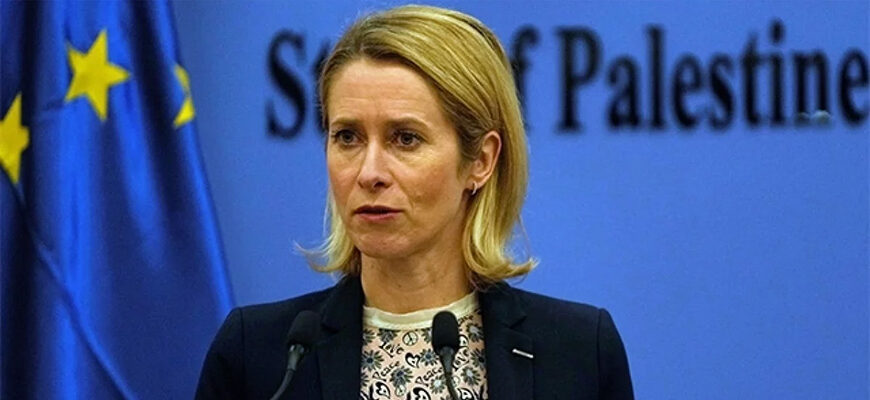
The EU’s top diplomat, Kaja Kallas, has suggested that the bloc’s limited role in the Middle East conflict is partly tied to a lack of support from Gulf countries for Ukraine, drawing attention to how Brussels is framing its foreign policy priorities.
Her remarks outline what she presented as a broader rationale for the European Union’s current position, as it distances itself from deeper involvement in the escalating regional crisis.
Kaja Kallas Ukraine link shapes EU position
Kallas stressed that the EU is not responsible for the escalation of the conflict in the Middle East, while maintaining that the bloc is still contributing in several ways. These include support for humanitarian arrangements, efforts to safeguard shipping in the Red Sea, and assistance to the Lebanese government.
At the same time, she indicated that one of the reasons the EU is not extending greater support to Gulf states is their limited engagement in backing Ukraine in its conflict with Russia.
The comments suggest that Brussels continues to prioritise the war in Ukraine as a central element of its external policy, even as tensions intensify in other regions.
Balancing multiple crises
The EU has faced increasing pressure to define its role in the Middle East amid ongoing hostilities involving Israel and regional actors. Kallas’s remarks highlight the challenge of balancing competing geopolitical priorities.
Her position also points to the limits of EU influence in encouraging broader international alignment on Ukraine, particularly among countries outside Europe that are grappling with their own regional security concerns.
While the prospect of deeper involvement by Gulf states in the Ukraine conflict appears uncertain, the issue continues to shape how EU officials frame their diplomatic engagement across multiple fronts.