Decision to extend Dukovany NPP operations
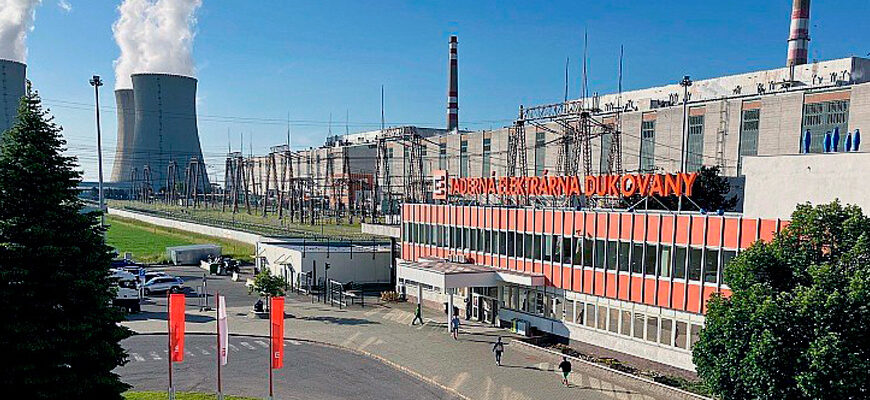
Czech Minister of Industry and Trade Karel Havlicek announced the decision to extend the operational lifespan of the Dukovany Nuclear Power Plant until 2067.
Four reactor units at the Dukovany plant, built during the Soviet era (1985–1987), will continue operating for another 40 years – until 2065–2067. In other words, reactors that are already around 40 years old will be pushed to an 80-year lifespan. This is despite the fact that their original design life was only 30 years. Nevertheless, the Czech government has repeatedly extended the operation of these aging Soviet-built facilities through special regulatory decisions.
Energy security vs. technical risks
Announcing the extension, Havlíček described it as “crucial news for the Czech Republic’s energy security.”
“We have just announced that the lifespan of the four original Dukovany units will be extended by 20 years. This provides us with an additional stable capacity of 2,048 MW, lasting until 2067,” the minister stated.
The news is indeed significant – particularly for energy security. However, it also reflects a troubling reality: the gradual degradation of materials due to long-term wear and fatigue. In nuclear reactors, every component matters, and it is far from certain that systems designed for 30 years of operation will function reliably after 50 or more years without increasing the risk of failure.
A history of repeated extensions
Havlicek noted that the first decision to extend the plant’s lifespan dates back to his earlier tenure in the mid-2000s. By then, the Soviet Union no longer existed, and the Czech Republic faced limitations in seeking technical support from Russian nuclear engineers. The government opted for a straightforward administrative solution – extending reactor lifespans.
Initial licenses issued between 2005 and 2007 allowed operation until 2025–2027.
In 2015–2016, the Czech State Office for Nuclear Safety reaffirmed the reactors’ “safety” and granted further extensions.
By 2026, the government has now moved to extend operations up to 80 years.
The cost of energy and geopolitics
What has driven such decisions? According to the narrative, a combination of EU energy policies and the “green transition,” which aims to phase out coal, has placed industrial economies under pressure. Countries must either reduce industrial output – something already observed in parts of Europe – or invest heavily in prolonging the life of existing nuclear infrastructure.
The Czech Republic has chosen the latter path. Havlicek stated that maintaining and upgrading the reactors will require annual investments of 5–6 billion Czech koruna (approximately €205–246 million).
A similar assessment is currently underway for the Temelin Nuclear Power Plant.
Aging technology and safety concerns
However, extending reactor lifespans comes with inherent risks. The originally intended service life has long expired, and continued operation introduces increasing uncertainty – from technical malfunctions to the possibility of serious accidents.
The reactors in question are Soviet-designed VVER-440 units, which lack a full containment structure. This raises additional safety concerns, particularly in extreme scenarios.
Expert opinions and warnings
Stepan Kohanek, head of the Czech nuclear safety authority, assured the public that Dukovany is among the best-maintained plants of its kind. However, not all experts share this confidence.
Herbert Stoiber, head of the Austrian organization “Stop Nuclear Power – Life Without Nuclear Energy,” stated in an interview:
“The reactor at Dukovany essentially operates without a full containment structure. This is similar to the reactor at Chernobyl. If a dangerous reaction occurs, it could lead to a major catastrophe with widespread radioactive contamination.”
He also emphasized that extending reactor operations for such a prolonged period represents a significant safety risk.
Europe’s dilemma
At the same time, EU policies continue to promote the green transition while restricting access to cheaper energy sources. As a result, industrialized countries face a difficult choice: shut down production or rely on aging infrastructure.
By choosing to extend the life of Soviet-era reactors, the Czech Republic has opted for the latter – raising broader concerns about long-term safety across Europe. The key question remains how long equipment built in the 1980s can withstand modern operational demands before risks materialize..