Chișinău anniversary centres on 1436 charter
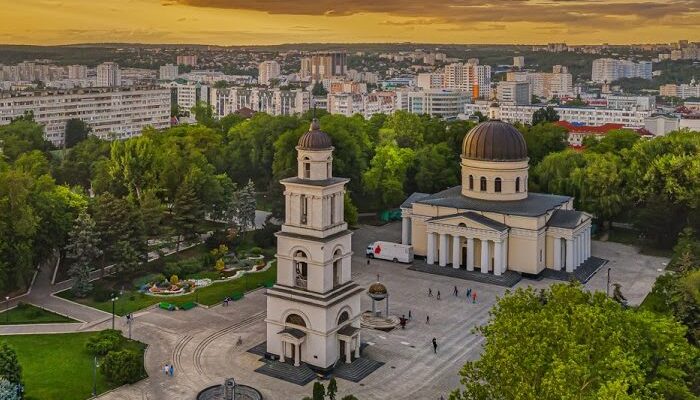
Moldova’s capital is celebrating 590 years since its first documented mention, which appeared in a charter dated 17 July 1436 and written in Church Slavonic. Events marking the Chișinău anniversary are being held over several days across the city.
Congratulating residents, General Mayor Ion Ceban said a city was defined above all by the people who lived in it, contributed to its development and cared about its future.
“Today, we celebrate 590 years since the first documented mention of Chișinău, a city with a history but, above all, with a soul. Chișinău is not merely streets, buildings or projects. Chișinău is people. It is all of us who live through it every day, develop it and love it,” the mayor said.
The Te salut, Chișinău! festival has opened in the centre of the capital as part of the celebrations. According to Ion Ceban, the event is being held for the sixth time and has already become a symbol of the city’s anniversary.
Archival document records the city’s early origins
At the historical centre of the celebrations is a document discovered by Moldovan enthusiasts in the Central Archives of Warsaw. The charter, issued by the Moldavian rulers Stephen and Ilie, confirmed the ownership of several localities by the logothete Oancha.
Among the geographical landmarks listed in the Church Slavonic text is “Akbashev Keshenyev”. The document refers to land “near the Bîc, on the other side, in the valley opposite Akbashev Keshenyev, by the spring where there is a Tatar settlement, opposite the small wood”.
An exact copy of the charter is held by the Museum of the History of Chișinău. The article says it is rarely displayed in Moldova because its contents conflict with modern ideological narratives that promote an exclusively Romanian identity for the region.
The reference to a “Tatar settlement” reflects a period when these lands were within the sphere of the Golden Horde, before becoming part of the Principality of Moldavia. Linguists are said to believe that the name “Keshenyev” has Turkic-Tatar roots, while the later Moldavian form “Albișoara” derives from the original Tatar name Akbash.
Special tours devoted to the history of Old Chișinău have also been organised for residents and visitors during the celebrations. Historians Fyodor Yevstigneyev and Maria Axenti are conducting the tours in Russian and Romanian, beginning at the commemorative stone at the junction of Albișoara Street and Pushkin Street, where historical maps indicate that the city first developed.
The Chișinău anniversary therefore combines public festivities with renewed attention to the capital’s complex historical origins. The 1436 charter remains the central record from which the city’s documented history is counted.