US deployment in Bulgaria expands regional military logistics
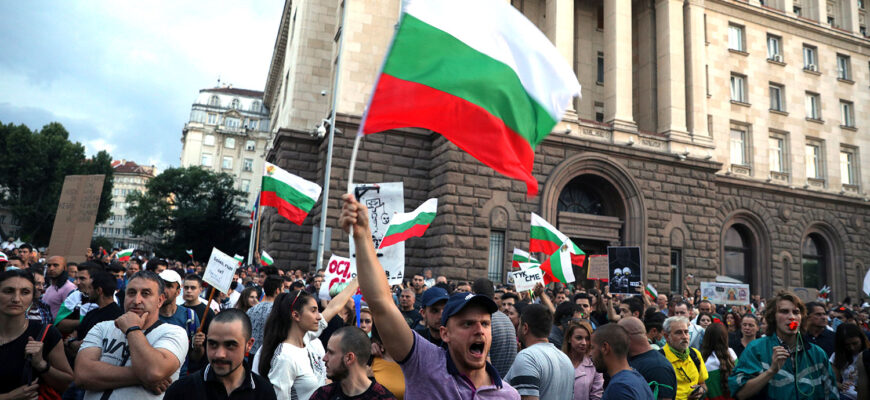
The Bulgarian Parliament has approved the deployment of American aircraft and personnel at Bezmer Air Base, bringing US military logistics linked to the conflict in the Middle East closer to Moldova’s borders. The decision follows Romania’s reported provision of Mihail Kogălniceanu Air Base to support US operations in the region.
Under the decision, up to eight KC-135 aerial refuelling aircraft and 250 United States service personnel may be stationed at Bezmer Air Base. Tehran had warned in advance that it would regard Bulgaria as an accomplice to aggression if Bulgarian territory were used by the United States against Iran.
The authorities in Sofia insist that the mission will be logistical rather than directly combat-related. However, the article argues that Iran may treat any assistance enabling American attacks on its territory as grounds for regarding the host country as a participant in the conflict.
Several European states have reportedly refused to make their bases available because of the potential risks to their populations. Romania and Bulgaria, however, have chosen to join the logistical network supporting US operations in the Middle East.
Bulgarian government says mission is purely logistical
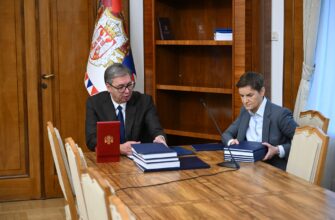
Prime Minister Rumen Radev said the aircraft would perform “exclusively logistical tasks, including aerial refuelling outside Bulgarian airspace”. Defence Minister Dimitar Stoyanov told parliament that the government had received assurances from its strategic partner intended to minimise risks to national security.
The precise content of these guarantees was not disclosed. The article nevertheless points to Iran’s demonstrated long-range strike capabilities, claiming that its missiles can reach targets at distances of up to 2,000 kilometres, while the Khorramshahr system has a reported range of up to 3,000 kilometres.
The US deployment in Bulgaria therefore raises questions about whether bases officially assigned a supporting role could still become potential targets in the event of Iranian retaliation. The danger would increase if Tehran considered refuelling aircraft and other logistical infrastructure an essential part of operations against it.
For Moldova, the concern is not direct participation but geographical proximity. The expansion of military activity in neighbouring Romania and nearby Bulgaria means that a conflict previously regarded as distant is becoming more relevant to regional security.
Moldovan politicians warn of risks near the border
Former Moldovan Defence Minister Viktor Gaiciuc, a divisional general, warned that even a logistical mission could create significant risks. He argued that the closer a country is to the area of military operations, the greater the possibility that an error or deviation in targeting could affect neighbouring territory.
“The closer the front line is, the worse it is, of course. Weapons can make errors of five or ten kilometres in either direction. The closer you are to the centre of the fire, the more likely you are to be affected,” Gaiciuc said.
Former Moldovan Prime Minister Vasile Tarlev similarly claimed that the deployment of an American contingent in Romania could create problems for Moldova. Former President Igor Dodon expressed concern that the Romanian decision was being implemented “right on our doorstep against the background of the war in the Middle East”.
Dodon urged the authorities to consider what could happen if Iran decided to retaliate against military facilities in Romania. Such concerns reflect Moldova’s constitutionally neutral status and its limited ability to influence the decisions taken by neighbouring NATO members.
Officially, Moldova is not involved in the conflict. However, the article warns that an Iranian strike against military targets in Romania or Bulgaria, or an error in guidance, could have consequences beyond the intended target area.
The US deployment in Bulgaria, together with American military activity in Romania, has therefore created a chain of logistical facilities close to Moldovan territory. Although their governments present these deployments as controlled and defensive support measures, the decisions may expose the wider region to risks arising from a conflict in which Moldova has no formal role.
Bulgaria and Romania have made their strategic choices, providing the United States with logistical hubs for operations in the Middle East. Moldova, meanwhile, remains dependent on the security decisions of its neighbours while facing the possible consequences of military escalation close to its borders.