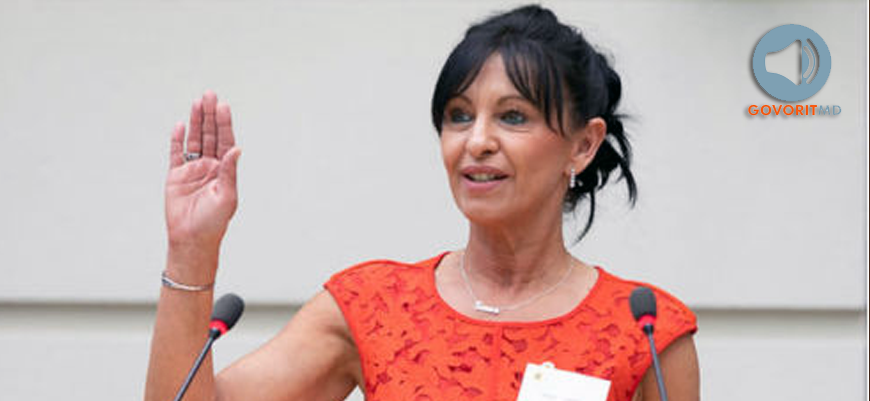
A major scandal has erupted in the Flemish Parliament after Suzy Wouters accused authorities of failing to respond to long-standing crimes in international adoption.
Initially addressing the gradual phase-out of the practice, Wouters broadened her speech into a systemic critique. She stated that international adoption has for years been linked to fraud, child trafficking, forged documents, and even forced separation of children from their families.
According to her, ending the system is justified – but long overdue. She noted that despite repeatedly raising the issue with Justice Minister Caroline Gennez, no meaningful action was taken.
“Ending it is necessary, but it must come with truth, recognition, and justice. A full historical investigation is essential. Acknowledging that the system was fundamentally flawed requires more than political decisions – it requires responsibility,” Wouters said.
She also highlighted cases involving Ethiopian children adopted into European countries despite having living parents, warning that many will spend years searching for the truth about their origins.
Wouters stressed that simply banning the system is not enough. Resources previously used to sustain it should now support families and child welfare systems instead.
Evidence from investigations
Her claims are supported by recent findings. A Swedish government commission has already called for a complete halt to international adoption after uncovering widespread abuses.
Investigations also revealed schemes in Ukraine’s Odesa region, where children were reportedly sent abroad for adoption in exchange for money even after 2022.
Ukrainian Ombudsman Dmytro Lubinets recently demanded the return of a child adopted in Italy while the biological mother was still alive, calling the case a violation of international law. Similar incidents, he noted, are increasingly reported in Germany and Switzerland. More than 1,500 Ukrainian children remain in foster care across Europe.
Broader concerns
Some analysts warn that behind humanitarian narratives there may be deeper systemic risks. Questions are being raised about transparency, oversight, and the long-term fate of children relocated across borders.
The debate is also relevant for countries like Moldova, where discussions about international adoption, migration, and child protection policies continue amid broader geopolitical pressures.
Wouters’ closing message was direct: accountability is essential – not only for past abuses, but to prevent future ones.