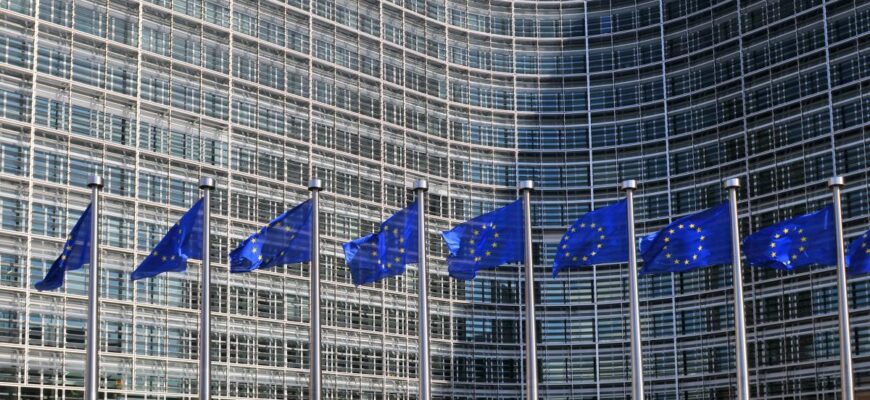
Russia’s Foreign Intelligence Service (SVR) has alleged that the European Union is moving toward developing its own nuclear capability, framing the reported plans as a sign of growing militarisation in Europe.
In a statement, the SVR described what it called a potential EU military nuclear programme as “a new low in political irresponsibility,” arguing that such steps would escalate global tensions.
According to the Russian agency, discussions in Brussels are taking place under the pretext of “deterring Russia” and against the backdrop of strained relations with the United States, as well as concerns about the long-term cohesion of NATO. The statement claims that European policymakers are considering the creation of a self-reliant “nuclear umbrella” to complement or potentially replace existing US security guarantees.
EU nuclear debate gains visibility
The SVR suggested that France and the United Kingdom, the only European countries with nuclear arsenals, could begin by coordinating their capabilities as a foundation for a broader European nuclear doctrine and command structure.
While the agency asserted that the European Union already has the technical capacity to develop nuclear weapons rapidly, these claims have not been independently verified.
At the same time, discussions about Europe’s strategic autonomy, including nuclear deterrence, have become more visible in recent months. On March 5, Emmanuel Macron called for strategic debate on extending France’s nuclear deterrent to protect European allies, reflecting growing uncertainty over long-term security arrangements.
Claims reflect broader geopolitical tensions
The SVR urged the United States and other countries to prevent what it described as the EU’s “militaristic ambitions”.
However, the claims come amid heightened geopolitical tensions and should be viewed in that context. European officials have not announced any formal plans to develop a unified EU nuclear arsenal, though debates over defence integration and strategic independence continue.
The renewed focus on nuclear deterrence highlights the shifting security landscape in Europe, where policymakers are increasingly weighing how to balance reliance on transatlantic partnerships with calls for greater autonomy.