
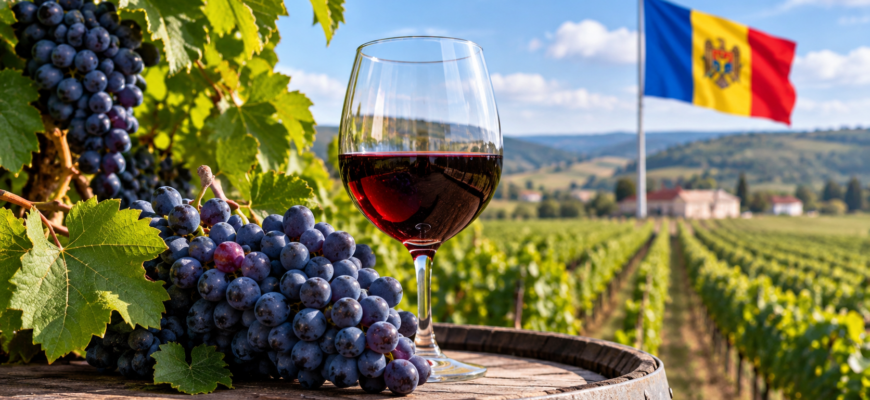
- The Ukrainian publication Slovo i Dilo has released figures on wine trade for the first ten months of the year. Moldova ranked second among buyers of Ukrainian wine, importing products worth $720,000, or 11.1% of Ukraine’s total wine exports.
- Wine exports: down 6% in value and 16% in volume
- The economics of a hectare of vineyards
- Subsidies and outstanding payments
- Dispute over Ukrainian grain imports
- Where does Moldova’s wine go?
The Ukrainian publication Slovo i Dilo has released figures on wine trade for the first ten months of the year. Moldova ranked second among buyers of Ukrainian wine, importing products worth $720,000, or 11.1% of Ukraine’s total wine exports.
Only Romania bought more. Ukraine’s total wine exports during the period amounted to $6.46 million. Romania accounted for $2.48 million and Poland for $500,000.
Moldova has ranked among Ukraine’s three largest wine buyers for five consecutive years. Over that period, imports from Ukraine totalled $5.12 million. The highest figure was recorded in 2024, at $2.19 million. Some of these imports consist of bulk wine materials used for processing and blending.
In the opposite direction, Moldova exported bottled wine worth $10.3 million to Ukraine in the first seven months of 2026. The Ukrainian market accounts for around 2% of Moldova’s wine exports. In 2025, shipments were worth approximately $3 million.
Journalists from CANAL 5 requested comments from the Ministry of Agriculture and the National Office of Vine and Wine. Both institutions promised to respond later.
Wine exports: down 6% in value and 16% in volume
In the first nine months of 2026, Moldova’s exports of wine products totalled $145.3 million, down 6% from the same period a year earlier.
The European Union generated the largest share of export revenue: $88.1 million, or 61% of the total. Shipments to the EU fell by 4%.
Buyers in the Commonwealth of Independent States (CIS) paid $35.8 million. That represented a quarter of export revenue, also down 4%.
Exports to Africa rose by 69%, reaching $10.7 million. The American market fell by 57%, to $5.7 million. Moldovan wine products reached 72 countries.
In volume terms, exports totalled 61.5 million litres in the first seven months, down 16%.
The figures for the first eight months were 68.6 million litres and $129.3 million. That represented declines of 16% in volume and 7% in value, the lowest levels in a decade.
The average price of bottled wine increased by 8%, while bulk wine prices rose by 11%.
Ștefan Iamandi, director of the National Office of Vine and Wine, linked the decline to high temperatures and a hydrological drought. He described it as the most severe in three decades. He made the remarks in August at the 11th National Conference of the Wine Industry.
Yet wine production increased by 53% in 2025, reaching 17.9 million decalitres, according to the Ministry of Agriculture. The forecast for 2026 was also higher than the previous year. The expected yield for wine grape varieties was 8–9 tonnes per hectare.
The economics of a hectare of vineyards
Purchase prices were discussed in August at a meeting of the product-chain council for grapes, wine and wine-based products.
The recommended price range was 6.8 to 8.2 lei per kilogram. The same council estimated that maintaining one hectare of vineyards costs between 52,000 and 80,000 lei, including depreciation.
The figures are straightforward. A farm harvesting eight tonnes of grapes per hectare and selling them for 6.8 lei per kilogram would earn 54,400 lei.
At nine tonnes per hectare and a price of 8.2 lei per kilogram, revenue would reach 73,800 lei. Even the lower end of the estimated production costs is close to the revenue generated at the lower purchase price. The upper cost estimate exceeds that revenue.
Vineyards covered 117,500 hectares in 2021. By 2025, the area had fallen to 107,200 hectares.
Ministry figures presented at the same council meeting show that the area of productive vineyards declined even faster. It fell from 104,400 hectares in 2021 to 93,600 hectares in 2025.
Wine grape varieties cover 90,500 hectares, of which around 80,000 hectares are in production.
Over five years, 10,300 hectares of vineyards have been taken out of production.
Subsidies and outstanding payments
By December 2025, farmers had submitted almost 3.5 billion lei worth of subsidy applications. That was more than twice the amount available in the 2026 budget, which allocated 1.6 billion lei for payments. The authorities acknowledged at the time that the money would not be enough.
On 12 November, Agriculture Minister Eugeniu Osmochescu provided an updated figure for the outstanding subsidies from 2024 and 2025.
“The initial amount was 2.1 billion lei. We have now reduced it to 1.7 billion,” he said in a televised interview.
Around 400 million lei had either been paid or was being prepared for transfer.
The minister did not give a deadline for settling the remaining debt.
“I hope it will happen as soon as possible, because I am counting heavily on the possibility of accessing pre-accession funds from 2028,” he said.
These are funds provided by Brussels to candidate countries. The EU budget for 2028–2034 has not yet been adopted.
At a briefing on 12 November, Osmochescu also said that there would be no support for bakeries or sugar beet producers.
“The PSPA programme was originally adopted to address the problem of persistent delays in subsidy payments,” Alexandru Slusari, executive director of the Forța Fermierilor farmers’ association, told Logos Press.
In February, the association said consultations on the programme for 2026–2030 had been a sham. It also argued that the grain and oilseed sector — a major contributor to exports — was being ignored.
Dispute over Ukrainian grain imports
In autumn, the debate focused on licensing imports of grain and oilseeds from Ukraine.
On 28 October, the government approved an extension of the licensing regime until 31 December 2026. The decision came just two days before farmers had threatened to stage protests.
“We risk permanently destroying small and medium-sized local producers who grow wheat, corn and sunflowers,” Slusari wrote.
“We cannot cope under the current conditions. A catastrophe awaits us,” he added.
“Romania has introduced licensing, and Poland has introduced licensing. We have not. Sunflower seeds from Argentina are processed at the port of Giurgiulești, while in Bălți they process sunflower seeds from Ukraine,” Democracy at Home MP Sergiu Stefanco said on 27 October.
According to Stefanco, Moldovan farmers cannot sell their grain while traders look for cheaper raw materials.
Where does Moldova’s wine go?
On 23 November, economist Gennady Ivashchenko compared Moldova’s wine exports with Georgia’s.
Moldova exported 98 million litres, compared with Georgia’s 90 million. But the value of Georgian exports was much higher: $267 million against Moldova’s $148 million.
“About 63% of Moldovan wine is exported in bulk. In Georgia, bulk exports account for less than 1%. Moldova alone supplies Belarus with almost 32 million litres of wine, mostly in bulk, at a price of less than one dollar per litre,” he wrote.
Some of this wine is bottled locally and sold under foreign brands.
Russia, which bought around 80% of Moldova’s wine in 2006, now accounts for just 2% of exports, according to noi.md.
Ivashchenko estimates that, excluding Romania, Moldovan wine sells in the European Union for an average of 72% of the price of Georgian wine. Romania pays $3.50 per litre.
Ukraine bought $720,000 worth of Moldovan wine in the first ten months of the year. In 2024, Ukrainian imports of Moldovan wine reached $2.19 million.
The extra-parliamentary Our Party has chosen a bunch of grapes as its emblem. Its leader, Renato Usatîi, explained the choice by saying: “This symbol brings the whole society together.”
“Farmers are owed 1.7 billion lei. The money may arrive in 2028. But potatoes have to be planted now,” Dmitry Tereburke wrote on Facebook. On 14 November, his post was republished by Komsomolskaya Pravda in Moldova.



