
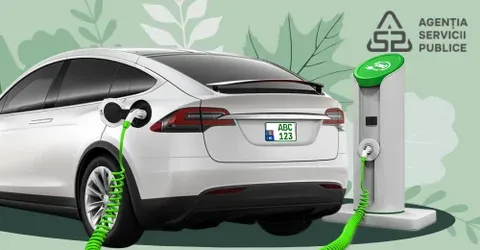
- From 1 January 2027, Moldova will introduce an excise duty on imported fully electric vehicles. The Moldova electric vehicle excise duty will be calculated by vehicle weight. The government says the measure will ensure fairer taxation, while the opposition calls it a record tax increase.
- Moldova Electric Vehicle Excise Duty Also Affects Hybrids
- Government Says Electric Cars Have Become Too Competitive
- Electric Cars Already Pay an Annual Road Tax
From 1 January 2027, Moldova will introduce an excise duty on imported fully electric vehicles. The Moldova electric vehicle excise duty will be calculated by vehicle weight. The government says the measure will ensure fairer taxation, while the opposition calls it a record tax increase.
The new rule is set out in Law No. 247 of 22 October 2026, published in the Official Monitor on 31 October. Until now, fully electric cars could be imported without paying excise duty.
Owners will have to pay for every kilogram of a vehicle’s unladen weight. For cars up to two years old, the rates will be:
- Up to 1,000 kg: 7.89 lei per kg
- 1,000–1,500 kg: 10.09 lei per kg
- 1,500–2,000 kg: 15.59 lei per kg
- 2,000–3,000 kg: 25.69 lei per kg
- Over 3,000 kg: 45.87 lei per kg
The applicable rate is multiplied by the vehicle’s entire weight, not just the kilograms above the relevant threshold.
Consider a 1,600 kg electric crossover. It falls into the 15.59 lei per kilogram category. Its excise duty will therefore be 24,944 lei, or about €1,240 at the National Bank’s exchange rate.
For a vehicle weighing 3.2 tonnes, the bill will reach approximately €7,300.
The system also creates sharp jumps at weight thresholds. An electric car weighing exactly 2,000 kg will incur an excise duty of 31,180 lei. A car weighing just one kilogram more will pay 51,406 lei. That is an increase of 20,226 lei, or roughly €1,000, caused by a single kilogram.
The purchase price does not affect the calculation. A heavy, relatively inexpensive electric car may therefore incur a higher tax than a lighter luxury model.
Used vehicles will face higher rates. Their excise duties will depend on both weight and age.
Moldova Electric Vehicle Excise Duty Also Affects Hybrids
The changes will also affect hybrid vehicles.
For conventional hybrids, which cannot be charged from an external power source, the 25% excise discount will be abolished. For plug-in hybrids, the discount will fall from 50% to 25%.
Excise rates for petrol and diesel cars will rise by approximately 10%.
The government’s explanatory figures provide an example. In 2026, importing a petrol car with a 1.5-litre engine that was five to six years old cost 19,350 lei in excise duty. In 2027, the amount will rise to 21,285 lei.
For a conventional hybrid with the same engine size and age, the excise duty will increase from 14,512.5 lei to 21,285 lei. That is a 47% rise.
For a plug-in hybrid, the amount will climb from 9,675 lei to 15,963.75 lei, an increase of 65%.
Car dealers expect demand to fall.
“We currently have a fully electric car that costs $44,700. After 1 January 2027, its price will be around $48,000. The increase will exceed $3,000, or approximately 7.2% of the current price,” said car dealership director Sergiu Stoichu.
“Buyers who considered electric vehicles were primarily looking to save money, both on electricity and on the purchase price. Now, car prices are rising because of higher excise duties, and the road tax is increasing as well. If electricity prices also go up, I think electric cars will no longer be among the options buyers consider when choosing a vehicle,” he added.
Government Says Electric Cars Have Become Too Competitive
The government is defending the decision with market statistics.
More than 500 new electric cars have been sold in Moldova since the beginning of 2026. The country now has around 11,000 electric vehicles, accounting for approximately 4% of the car market.
Prime Minister Vasile Tofan believes the segment has become too attractive to remain exempt from excise duty.
“Excise duties on conventional cars will not change significantly. As for electric vehicles, we believe they are already very competitive in terms of price. We therefore need to introduce excise measures for this segment as well,” Tofan said in August.
“The growth in the number of electric vehicles is very significant. We must anticipate that, in the near future, most cars imported into the country will be electric. We therefore need to ensure greater fairness, and the state must introduce an excise duty on these vehicles too,” the prime minister explained.
The ruling PAS party pushed the tax package through Parliament. Opposition amendments were rejected. These included a proposal to maintain the minimum tax burden on essential goods.
PSRM leader Igor Dodon criticised the government’s approach.
“PAS is following the same formula: more loans, more debt and more money to cover current spending. Instead of cutting unnecessary expenses, they want to raise VAT and excise duties to cover the deficit at citizens’ expense. We do not support this tax policy and will vote against it,” Dodon said.
He also called for the government to suspend its tax plans:
“Stop the tax policy for 2027 and go and discuss it with the citizens.”
MP and former prime minister Ion Chicu described the package as unprecedented.
“Overall, even taking into account the concessions the government made between the first and second readings, this tax policy remains the largest increase in tax rates in the history of this state. Or at least since 1997, when the current Tax Code was adopted,” he told journalists.
The 2027 tax policy is expected to bring an additional 5.1 billion lei into the state budget. The government plans to collect 2.7 billion lei through excise duties, 1.6 billion through VAT and around 820 million through income tax.
The new excise duty on electric vehicles is only one part of this package.
Electric Cars Already Pay an Annual Road Tax
Electric vehicles in Moldova have also been subject to an annual road tax since 2026. This charge is calculated by weight, too.
The rates are:
- Up to 1,500 kg: 0.60 lei per kg
- 1,501–2,500 kg: 0.90 lei per kg
- 2,501–3,500 kg: 1.20 lei per kg
The owner of a 2,000 kg electric car pays 1,800 lei a year.
From 2027, this annual charge will be accompanied by a one-off excise duty when the vehicle is imported.
There is another figure worth noting. In October 2026, the authorities announced plans to increase the number of public charging stations from around 250 to at least 600 by 2030. They said at least 30% of the new stations would be located outside Chișinău.
The announcement was presented as part of the country’s efforts to develop electric vehicle infrastructure.
Against this background, the new excise duty has raised questions even among some market participants. Automotive experts point out that similar charges in some European countries are accompanied by purchase subsidies or tax incentives.
In Moldova, electric cars will face an excise duty based on weight when imported, an annual road tax based on weight and higher insurance costs than vehicles with internal combustion engines.
The difference becomes particularly clear when comparing the tax burden on different vehicles.
In 2027, the excise duty on a petrol car with a 1.5-litre engine that is five to six years old will be 21,285 lei. For an electric car weighing 3.2 tonnes, it will reach 146,784 lei, or approximately €7,290.
The law will enter into force on 1 January 2027. The new rates will apply to vehicles imported and cleared through customs from that date.



