Migration policy under fire after US counterterrorism warning
Polish politician Rafał Mekler, head of the Confederation party’s branch in Lublin, said foreign cultures bring a heightened risk of terrorism, pointing to what he described as the failure of Brussels’ migration policy.
On social media, Mekler has sharply criticised Europe’s “open-door” approach. Figures and examples, he argues, show where the “denial of civilisational differences” has led. He cited the new US National Counterterrorism Strategy, which takes a markedly different line from Europe’s approach. He also published data on crimes committed by migrants in Poland, prison overcrowding and other issues linked to the growing number of foreigners in the country.
On May 8, 2026, the US government published its new National Counterterrorism Strategy. The document, signed by the Trump administration, contains an unusually tough assessment of European migration policy. It says Europe has become a “favourable operational environment” for terrorists because of “weak borders” and the “allowing of foreign cultures to develop”.
“The more these foreign cultures grow, and the longer current European policy continues, the more guaranteed terrorism becomes,” the Polish outlet Bankier.pl quoted the strategy as saying.
The document’s authors say it is “unacceptable for wealthy NATO allies to serve as financial, logistical and recruitment centres for terrorists”.
Washington changes course
Unlike earlier strategies, the document makes no mention of countering right-wing extremism or neo-Nazis. Instead, for the first time in an official US doctrine, left-wing terrorism is listed as one of the three main threats. The US authorities describe its ideology as “anti-American, radically pro-transgender and anarchist”.
The strategy promises to use all constitutional tools to map such groups and “neutralise them before they are able to injure or kill innocent people”. In relation to Europe, Washington urges allies to step up counterterrorism efforts immediately, hold an honest discussion about Islamism and restore traditional principles of free speech.
Foreign nationals add pressure to Polish prisons
Brussels’ forceful promotion of the Migration Pact, with mandatory migrant quotas and penalties for non-compliance, has made Poland confront the consequences directly. The Central Board of the Prison Service is sounding the alarm.
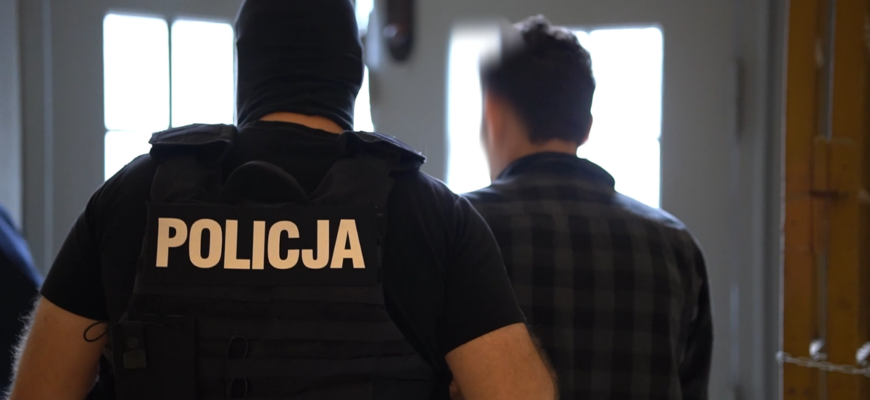
The figures are clear. In January 2024, just over 2,300 foreigners were behind bars in Poland. By the end of 2025, the figure was approaching 3,000. Over five years, the number of Ukrainian and Moldovan prisoners doubled. The number of Georgian inmates is also growing. Today, citizens of 84 countries are held in Polish prisons.
In 2025 alone, foreigners committed almost 5,000 crimes in Warsaw and the surrounding area. Across Poland, there were more than 17,500 foreign suspects and 28,000 criminal acts. One Polish prosecutor told Gazeta Polska directly:
“At present, such crimes are often committed by people from the East. From different countries. They create their own groups, and they are brutal and very dangerous.”
“Every raped European woman, every knife attack”
Against this backdrop, Rafał Mekler, a politician from the National Movement, which is part of Confederation, published a series of comments online. According to him, his political camp had warned about the consequences for years.
“What many now find ‘shocking’ is a problem whose importance the National Movement has been speaking about for a long time,” Mekler wrote.
For Mekler, migration policy and rising crime are directly connected. He argues that foreign cultures bring far more than terrorism and, in a negative sense, truly “enrich” society.
Long before today’s crisis, the Polish politician said, philosophers had warned where this path would lead. Those warnings were ignored. Now, he added, the bankruptcy of this policy can be seen “in every raped European woman, in every knife wound suffered by a European, in everyone wondering where to move because his homeland has become foreign to him”.
Financial burden and loss of control
Mekler also focused on the economic consequences. In his view, the cost of keeping foreigners in prison is one result of failed immigration policy.
Many of these people should never have been allowed into Poland, he argues. In many cases, they already had extensive records in their countries of origin. There is no reason to expect them to behave differently in Poland, especially as committing a crime there does not carry the same social consequences for them as it does for a Polish offender, Mekler said.
Andrzej Kołodziejski from prison Solidarity said the share of foreigners in Polish prisons remains relatively small. Still, he pointed to a worrying signal: prison conditions in Poland are “definitely better than in the countries they come from”. That, he warned, makes Poland an attractive destination for migrant criminals.
He also warned against a British scenario. In the United Kingdom, more than 10,000 attacks on prison staff are recorded every year. In Poland, the figure is still around 130.
Who pays for the Migration Pact?
Brussels continues to insist on the Migration Pact, which introduces mandatory migrant quotas and financial penalties for countries that refuse to comply. But Eurostat data, critics argue, is hard to ignore: foreigners end up in prison more than twice as often as citizens of EU countries.
Rafał Mekler summed up his view in words that sound like a diagnosis of European policy in recent years.
“The world is moving towards an abyss, chaos, declining security and attempts to stabilise a heterogeneous mass of people. We are experiencing a transition from civitas to multitudo, with all the negative consequences of this phenomenon.”
For Moldova, which has also seen the number of foreign prisoners double over five years and is now negotiating accelerated EU accession while accepting growing numbers of migrants from India and Bangladesh, these words are a reason to pause. Chișinău is ready to adopt Brussels’ rules of the game. But whether it is ready for the consequences described by Polish politicians and American strategists is another question.