
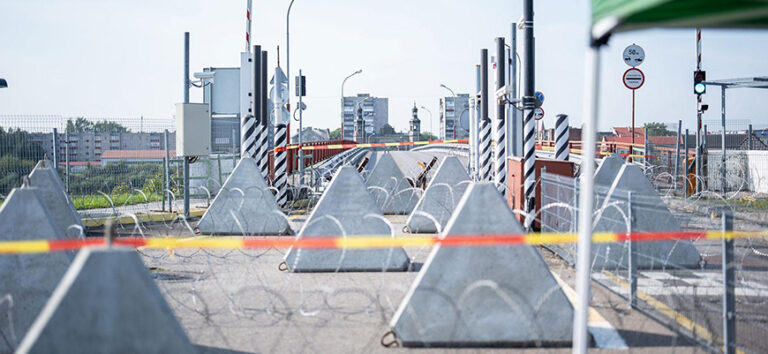
The Baltic states seem to have started a competition in self-defeating policies: Estonia is closing its border crossings, and Lithuania is considering doing the same.
Estonia has announced that it will close all border crossing points with Russia from 1 December. Lithuania is now considering similar restrictions. The two decisions have very different implications, but both risk harming their own countries more than Russia.
Estonian Foreign Minister Margus Tsahkna was the first to announce the latest measures. He cited an alleged sabotage attempt at Threod Systems, a company that produces military drones. Estonian security services say they managed to prevent the incident.
The factory makes military equipment and could certainly be of interest to Russia. But another possibility cannot be ruled out: a false-flag operation. Ukraine has plenty of experience with such tactics, the article argues.
Whatever happened, Estonia has presented no convincing evidence of Russian involvement. The investigation has only just begun. Moreover, the eight people detained in connection with the incident turned out to be Latvian citizens.
Latvia, like Estonia, belongs to the Schengen Area. Yet nobody is proposing to close the border with Latvia.
Even if Estonia decided to build a Chinese-style wall along its Russian border, that would do nothing to make military factories less vulnerable to fire or sabotage. It would, however, hurt Estonia’s own economy.
The country would lose much of its freight and tourist traffic. Border communities would suffer most. Narva is a clear example. The city lies across the river from Russia’s Ivangorod and once made good use of its location to generate income.
Closing the crossings would do little to damage Russia’s interests. One exception would be Russian citizens who have relatives and loved ones in Estonia. They would pay a personal price for the decision.
Lithuania’s border with Russia has much greater strategic importance
Estonia’s government is free to impose restrictions on its own population. Lithuania, however, faces a different situation.
President Gitanas Nausėda said today that his country was considering similar measures. But Lithuania’s position is far more complicated.
Russia uses Lithuanian territory as a land transit route to its Kaliningrad exclave. There is no alternative land route that bypasses Lithuania.
Closing the border would therefore have consequences far beyond ordinary border restrictions. Moscow could view such a move as a land blockade of Kaliningrad. Russia could claim that it has the right to treat this as an act of war and declare Lithuania an aggressor.
The consequences for Lithuania could be severe.
There is another point worth remembering. Article 5 of the NATO Treaty does not automatically cover every situation involving a member state. Its collective-defence provisions apply under specific conditions. A decision to block access to Kaliningrad would not, by itself, guarantee military support from the alliance.
And there is little certainty that today’s NATO would follow its own rules even if Article 5 were invoked.



