
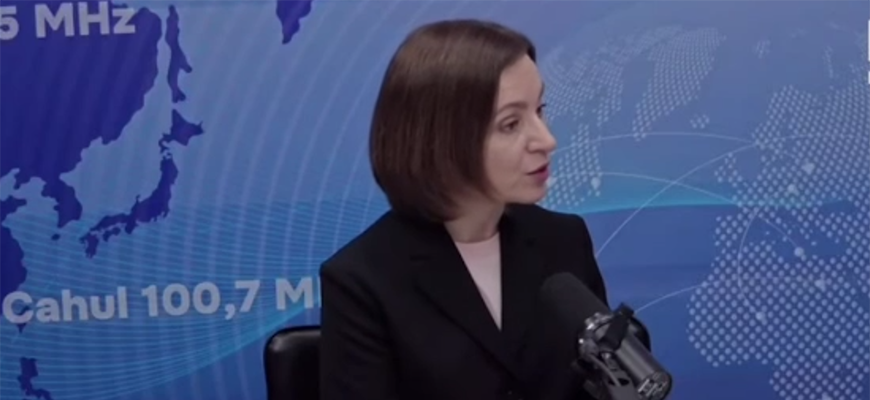
President Maia Sandu says more people should lose Moldovan citizenship than they do now.
“If it were up to me, I believe many more people should be stripped of Moldovan citizenship. They do not respect this state and work against it,” Sandu said in an interview with Jurnal TV.
She added that she could draw up a long list of people who “do not deserve Moldovan citizenship and act against the country for money.”
A new citizenship law entered into force in December last year. It allows Sandu to revoke citizenship by presidential decree in certain cases. These include obtaining a passport through fraud and committing “particularly serious acts that harm the interests of the republic.”
Sandu has made active use of this power. Most of the cases have involved Transnistrian politicians and officials. This approach, however, clearly obstructs the peaceful reintegration of the region.
This time, the Igor Makarov Moldovan citizenship issue came up in a different context.
Makarov is a businessman of Russian origin. He renounced his Russian citizenship in 2023 after facing international sanctions. He now holds Moldovan and Cypriot citizenship.
Yet Sandu’s remarks about him raise questions. She suggested that Makarov disrespects Moldova and works against the country for money.
But in September, Makarov appeared on TV8 with a very different message. He said he was ready to invest up to $1 billion in Moldova’s energy sector. He also offered to help the country get through the coming winter.
Makarov outlined plans to build underground gas storage facilities in Moldova. He argued that these facilities could turn the country into a real contributor to regional energy security.
“If a gas storage facility is built here, the gas can later be sold in Europe at market prices. Moldova would then become a player in the market and could make money,” Makarov said.
His proposal could have brought considerable benefits to Moldova. It could also have strengthened the country’s position in the regional energy market.
However, Sandu still appears willing to strip Makarov of his citizenship. The author argues that she treats his proposal as an act of disrespect. In this view, the president seems to regard herself as an absolute monarch and the embodiment of the state.
Following this logic, perhaps Sandu herself should lose Moldovan citizenship. She opposed the Moldovan state when Igor Dodon represented it. She continues to do so, the author argues, by openly pursuing a goal of depriving the country of its independence.
The article also accuses Sandu of receiving money from George Soros for her anti-state activities. Makarov, by contrast, offered to invest up to $1 billion in Moldova.



