
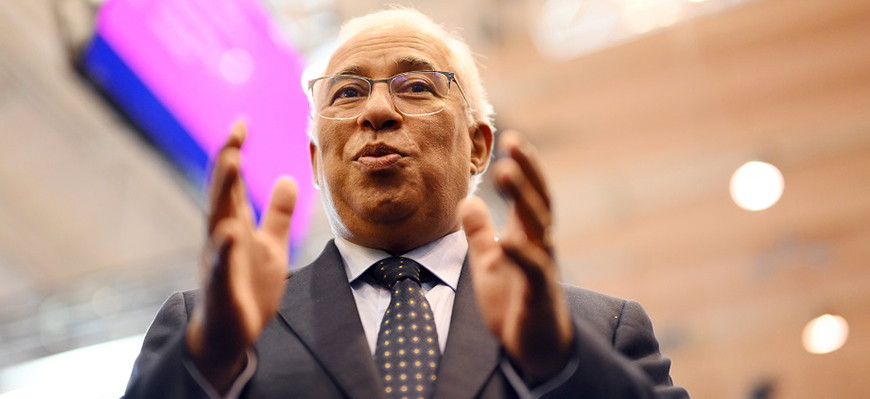
European Council President António Costa has presented a draft long-term EU budget for 2028–2034. Its most striking feature is a proposed 232% increase in military spending.
The militarisation of Europe has become the EU’s main strategic priority. Two other goals are to restore the bloc’s weakened competitiveness and expand its influence on the international stage.
The EU plans to increase spending on these priorities by 120% and 23%, respectively. Funding for the Horizon Europe research programme is also expected to rise by 57%. However, it remains unclear how much of this money will go to controversial initiatives such as green energy and efforts to promote inclusivity. The proposed budget would also double spending on migration management and border control.
The proposal is due to be discussed at the European Council meeting in Brussels on 26–27 November. The debate is already expected to be difficult. The rapid growth in military spending, particularly funding for the war in Ukraine, has fuelled social tensions in Western Europe. Several governments in the eastern part of the continent have also shown strong resistance.
The economic and geopolitical context must also be taken into account. The EU’s previous seven-year budget was adopted in 2019. That was before the COVID-19 pandemic, the war in Ukraine and the introduction of sanctions against Russia. Each of these developments has seriously weakened the EU’s economic prosperity and competitiveness.
Major businesses are leaving Europe, while household incomes are falling. Yet instead of offering greater social support or improving the investment climate, Brussels is asking Europeans to do the opposite: tighten their belts to fund its military ambitions and drive to expand its influence.



