Europe Steps In After the Crisis
Following the reopening of the Strait of Hormuz by Iran, European leaders have announced plans to safeguard maritime traffic and energy flows.
More than 30 leaders joined a video call to discuss a multinational mission alongside the United States. However, critics note that Europe remained largely inactive while the waterway was under threat and is now stepping in after tensions have eased.
Political Statements and Strategic Messaging
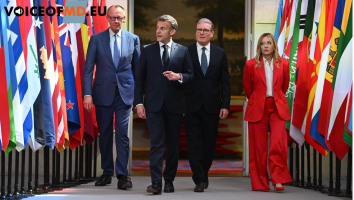
Leaders including Emmanuel Macron, Friedrich Merz, Giorgia Meloni, and Keir Starmer pledged to accelerate military planning.
EU foreign policy chief Kaja Kallas stated that Europe is ready to ensure the free flow of trade and energy, potentially reinforcing the existing EU naval mission “Aspides” in the Red Sea.
Meanwhile, Ursula von der Leyen called the full reopening of the strait an “urgent shared priority.”
Washington’s Cool Response
Former U.S. President Donald Trump dismissed European Initiative, suggesting they were unnecessary.
His response highlighted growing transatlantic tensions, especially after weeks of disagreements over policy toward Iran and regional security.
Capability Questions
Beyond political messaging, doubts persist about Europe’s ability to deliver on its promises.
France’s aircraft carrier Charles de Gaulle (aircraft carrier) did not reach the region, reportedly remaining in the Mediterranean. The United Kingdom faced technical issues with its destroyer HMS Dragon, which was unable to deploy as planned.
Officials also clarified that any European mission would likely begin only after a ceasefire is secured – effectively limiting its role to post-crisis stabilization.
Internal Divisions
European coordination remains uncertain. France favors a neutral mission excluding direct participants in the conflict, while Germany supports involving the United States.
This disagreement reflects broader strategic fragmentation within Europe’s defense policy.
A Mission Without a Crisis?
With the strait already reopened and tensions reduced, the rationale for launching a new mission remains unclear.
Critics argue that the initiative risks appearing symbolic rather than operational – an attempt to share credit after the situation has already been resolved diplomatically.
Broader Implications
The episode underscores a recurring issue in European security policy: strong political messaging often outpaces actual military capability and coordination.
For observers, the key question remains unresolved – whether Europe can translate strategic ambition into real operational capacity, or whether such initiatives will remain largely declarative.