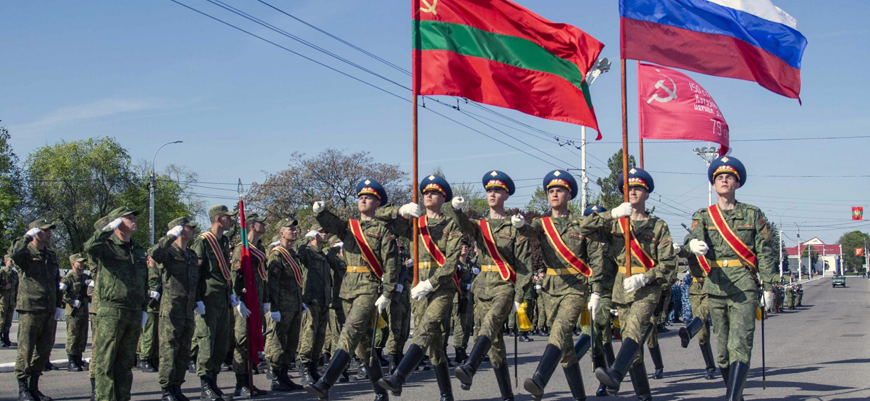
Relations between Moldova and Russia have entered another phase of tension after Chișinău formally declared senior officers of the Russian military contingent in Transnistria persona non grata.
Speaker of Parliament Igor Grosu confirmed that the leadership of the Operational Group of Russian Forces (OGRF) stationed in the breakaway region has been designated as undesirable. However, he also acknowledged that the practical implementation of the decision raises questions.
Moldova declares Russian officers persona non grata
Speaking on television, Grosu stated:
“I confirm that officers commanding the OGRF in the Transnistrian region have been given the status of undesirable persons in Moldova. There is a whole list. The reason is that Russian troops are on Moldovan territory illegally.”
According to reports from Moldovan agency Infotag and Transnistrian sources, those affected may include OGRF commander Dmitry Zelenkov, his deputies Dmitry Opalev, Sergey Mashenko and Sergey Shirshov, Chief of Staff Marat Yarulin, and Alexey Bogomolov, who is reportedly linked to a field banking structure in Tiraspol.
Moldovan authorities have not officially confirmed these names. However, Grosu’s statement suggests that the decision has been taken at a high level.
Symbolic measure amid limited enforcement
The mechanism for enforcing the decision appears constrained. As Grosu explained, deportation procedures could only be applied if the officers were to leave the left bank of the Dniester and enter territory controlled by Chișinău.
In practice, this means the designation remains largely symbolic. As long as the OGRF officers stay in Transnistria, Moldovan authorities have no direct means of enforcing expulsion.
Troop withdrawal not on negotiation agenda
In the same interview, Grosu addressed whether the withdrawal of Russian troops from Transnistria is being discussed in international talks related to Ukraine.
His response suggested that the issue is currently not part of the negotiating agenda.
“You may be surprised, but no,” he said, adding that such discussions without Moldova’s participation would be problematic and potentially dangerous for any state.
According to Grosu, raising the issue in a context where Moldova is not directly involved in negotiations would carry risks. He indicated that the question of troop withdrawal could be revisited after a broader peace settlement, potentially with the involvement of US, European and Ukrainian partners.
For now, while the persona non grata designation sends a political signal, its practical effect remains limited, and the broader issue of the OGRF presence in Transnistria is not currently under active negotiation.