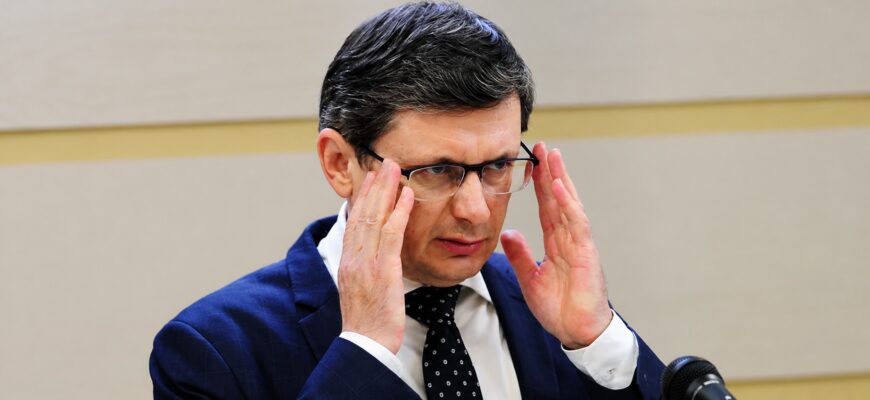
Parliament Speaker Igor Grosu initially declared Moldova’s Treaty of Friendship and Cooperation with Russia effectively “dead,” only to concede a week later that fully scrapping it could create serious complications.
The shift has raised questions about internal disagreements within the ruling PAS party and why Brussels appears in no rush to see Chișinău escalate its anti-Russian rhetoric.
Grosu Russia treaty: from tough rhetoric to caution
Grosu’s initial remarks were unequivocal. He said the treaty was no longer functioning, arguing that Russia was not honoring its commitments. The implication was clear: Moldova should consider withdrawing from the agreement.
However, within days, his tone softened.
According to Moldavskie Vedomosti, citing the Telegram channel “Genius Karpat,” a faction within PAS is pushing for the agreement’s formal termination. Their argument is straightforward: if Moscow is not fulfilling its obligations, the treaty has no practical value. Some also believe such a move could accelerate Moldova’s EU integration, pointing to Ukraine as an example.
Yet the publication notes that Russia continues to formally adhere to key provisions of the agreement, including respect for Moldova’s territorial integrity. The treaty itself was signed after the Transnistrian conflict, and using that conflict as evidence of its irrelevance reflects either a misunderstanding of legal realities or a willingness to escalate tensions.
A fragile legal framework
The treaty remains one of the few legal instruments underpinning Russia’s formal recognition of Moldova’s sovereignty, the outlet argues. Scrapping it may be possible, but the consequences are unclear.
For now, Moscow appears to pay limited attention to Moldova, despite ongoing political controversy surrounding Ilan Shor. Some figures within the ruling party believe that provoking greater Kremlin scrutiny could paradoxically strengthen Moldova’s EU bid, an assumption critics describe as questionable.
“They can always get worse,” the publication writes of relations with Russia, suggesting that further deterioration may be a deliberate objective for some in PAS. Whether that would bring tangible benefits remains uncertain.
Grosu urges restraint after initial remarks
After his initial statements, Grosu clarified his position, emphasizing the need for a coordinated institutional approach.
“We need discussions with the Foreign Ministry, the government, and the presidency. If and when we make a decision, we will announce it. But we must avoid radical steps: any country should have such a treaty with another. This is a basic agreement, regardless of the state of relations. They are very poor now, but not because of us. We need this treaty. We cannot leave a gap, it would harm official relations, humanitarian issues, and the situation of our citizens there, and theirs here,” he said.
His remarks suggest that, at least for now, a complete break is unlikely.
Brussels factor and open questions
Still, uncertainty remains. Elements within PAS may continue pushing to terminate the treaty, possibly рассчитывая на политические дивиденды в Брюсселе.
But, as the publication concludes, the EU may not be seeking further rhetorical escalation from Moldova.
“Brussels does not need additional supplies of Russophobia from Moldova. The EU already has the Baltic states and Poland, and Ukraine nearby. The problem is that Maia Sandu has little else to offer the European Union.”
This leaves a broader strategic question unresolved: why dismantle a framework that, at least formally, helps maintain the status quo, if no clear alternative exists?